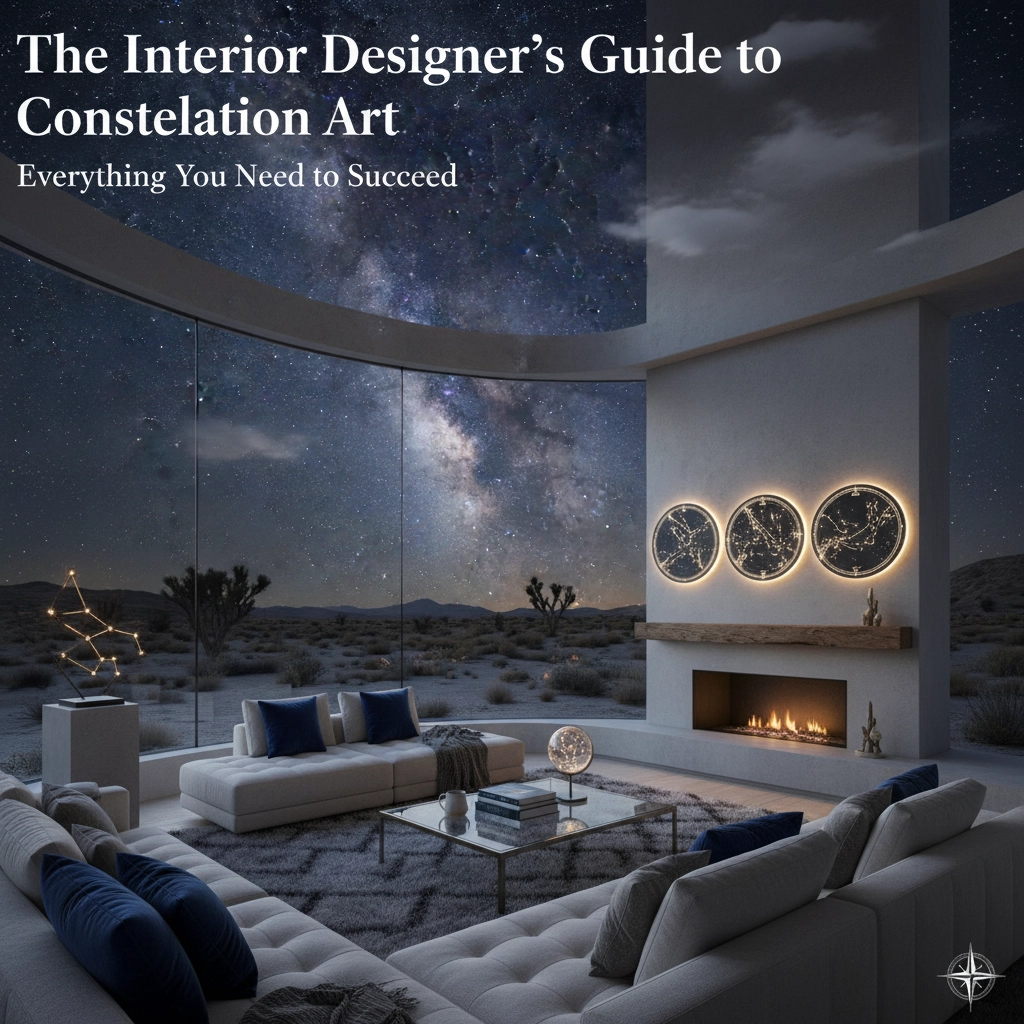
The Interior Designer’s Guide to Constellation Art: Everything You Need to Succeed
Most interior designers think celestial decor is just a passing trend… until they see how constellation art transforms spaces into unforgettable experiences that clients absolutely love.
Here's the thing – constellation art isn't going anywhere. It taps into something deeper than design trends. It's about bringing meaning, personalization, and that sense of wonder into spaces. And if you're not using it in your projects, you're missing out on a huge opportunity.
Why Constellation Art Works So Well
Constellation art hits different because it's personal. When someone sees their zodiac sign mapped out on their bedroom wall, or a meaningful star pattern in their living room, it creates an emotional connection that generic art just can't match.
The beauty is in its versatility. Whether you're working on a minimalist loft, a cozy cottage, or a sleek corporate office, there's a way to make constellation art work. It's not about forcing stars into every corner – it's about finding the right celestial touch that elevates the entire space.
Think of it as storytelling through design. Every constellation has a story, whether it's mythological, personal, or cultural. When you incorporate these elements thoughtfully, you're not just decorating – you're creating narrative spaces that resonate with people on a deeper level.
The Celestial Aesthetic Framework
Celestial design revolves around deep colors like navy, midnight blue, and black, accented with metallics – gold, silver, and iridescent touches that catch light like stardust. But here's what most people get wrong: they think it has to be dark and moody all the time.
The best constellation art works because it balances these cosmic elements with the existing design language of the space. In a Scandinavian-style room, you might use soft constellation prints with neutral tones. In a maximalist space, you could go bold with a dramatic galaxy mural as a statement wall.

The key is understanding that celestial doesn't automatically mean "space theme." It's more subtle than that. It's about bringing that sense of wonder and connection to something bigger into everyday spaces.
Practical Constellation Art Techniques
Let's get into the actual methods that work. I've tested these with real clients, and they deliver every time.
The Washi Tape Method is perfect for renters or clients who want something temporary. You map out the constellation with pencil dots first, then connect them with washi tape. It sounds simple, but the results are surprisingly sophisticated. Plus, if they change their mind, it's easy to adjust.
Custom Canvas Pieces give you more permanence and sophistication. Use watercolor techniques for a dreamy effect, or go geometric with clean lines and metallic accents. The grid transfer method ensures accuracy if you're recreating actual constellations.
Wall Decals and Stencils work great for clients who want the look without the commitment of paint. You can create custom stencils for unique constellations or use high-quality vinyl decals that look hand-painted.
The DIY approach isn't just about saving money – it's about creating something truly custom. When clients are involved in choosing their constellations and even helping create the art, they become more invested in the entire design.
Material Selection That Makes a Difference
The materials you choose can make or break a constellation art project. For wall applications, washi tape gives you flexibility, but make sure you're using quality tape that won't damage paint when removed.
For canvas work, watercolor paper holds up better than regular canvas for mixed media applications. If you're adding gold leaf or metallic accents, invest in proper adhesive – cheap alternatives show their age quickly.

Here's a pro tip: layer your materials. Start with your base constellation in a subtle tone, then add metallic accents at key connection points. This creates depth and visual interest without overwhelming the design.
Don't forget about lighting. Constellation art looks completely different under various lighting conditions. Test your pieces under both natural and artificial light before final installation.
Choosing Meaningful Constellations
This is where the magic happens. Anyone can slap some stars on a wall, but choosing the right constellations makes the difference between decoration and meaningful design.
Start with the obvious – zodiac signs. But don't stop there. Ask about significant dates, favorite myths, or family connections. Maybe they met under a certain constellation, or their grandmother always pointed out Cassiopeia.
Seasonal constellations work well in spaces that change throughout the year. Cultural constellations can honor heritage or travel experiences. Created constellations – patterns you design together – can represent family members, pets, or important life events.
The consultation process becomes part of the design experience. When you're discussing constellation choices, you're really talking about what matters to your clients. This information shapes not just the art, but the entire space.
Integration Across Design Styles
Here's where constellation art proves its versatility. In minimalist spaces, a single, clean constellation map can serve as the perfect focal point. The key is restraint – one beautiful piece that draws the eye without cluttering the aesthetic.
For maximalist or eclectic spaces, you can layer constellation elements throughout. Combine framed star charts with celestial mirrors, add constellation patterns to textiles, or integrate crystal collections that complement the cosmic theme.

Scandinavian and cottagecore styles benefit from softer constellation approaches. Think embroidered constellation pillows, subtle star garlands, or moon phase wall hangings that feel organic and handmade.
The witchy and dark academia aesthetics naturally embrace constellation art, but be careful not to go overboard. Even in these dramatic styles, balance is key.
Professional Presentation Tips
Framing makes all the difference. A simple constellation sketch becomes sophisticated artwork with the right frame and matting. Consider copper frames for warmth, black frames for drama, or natural wood for organic appeal.
Scale matters more than you might think. Large constellation maps work as statement pieces, while smaller pieces cluster beautifully in gallery walls or shelf styling. Don't be afraid to mix sizes – it creates visual rhythm.
Color coordination is crucial. Even if you're working with "universal" elements like stars, they need to harmonize with the existing palette. Navy backgrounds work in most settings, but consider the undertones in your client's existing colors.
Crystal and Gemstone Integration
This is where constellation art gets really interesting. Crystals and gemstones naturally complement celestial themes, but they also add texture and energy to spaces in ways that flat art can't.
Position crystals strategically near constellation art to create visual connections. Amethyst works beautifully with cooler constellation pieces, while quartz adds brightness to darker cosmic themes.
But here's the important part – don't let crystals overwhelm the art. They should enhance the celestial story, not compete with it. Think of them as supporting actors, not the main event.
Making It Work for Your Business
Offering constellation art services sets you apart in several ways. First, it appeals to clients looking for personalization – something you can't get from mass-produced art. Second, it works across budgets, from simple washi tape installations to custom painted murals.
The consultation process itself becomes a value-add service. When you're helping clients choose meaningful constellations, you're providing design psychology, not just decoration. This deeper engagement often leads to larger projects and stronger client relationships.
Most importantly, constellation art creates Instagram-worthy spaces that market themselves. When clients love their constellation art enough to share it, you get authentic social proof that builds your reputation.
Start small with a few constellation techniques, build your portfolio with before-and-after shots, and watch how this simple addition transforms both your spaces and your business. The stars, as they say, are the limit.