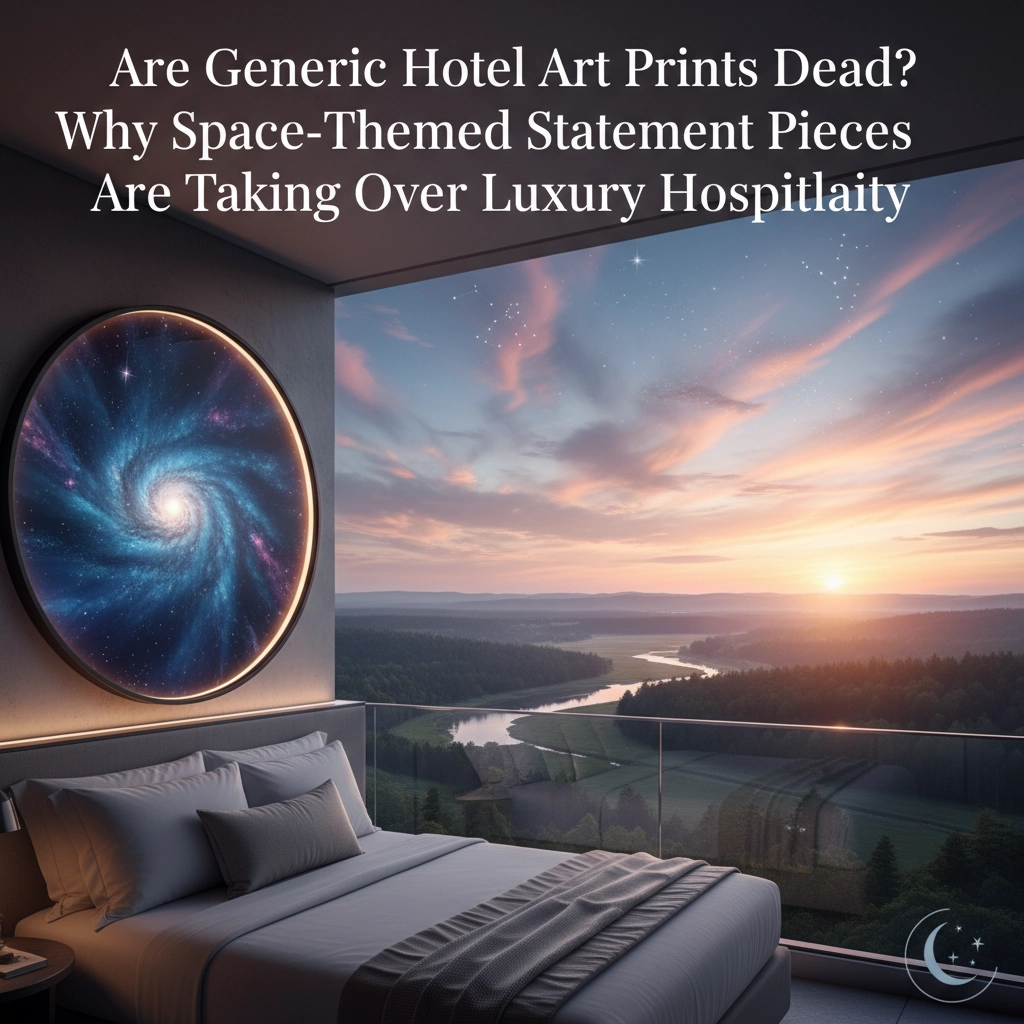
Are Generic Hotel Art Prints Dead? Why Space-Themed Statement Pieces Are Taking Over Luxury Hospitality
The hospitality industry stands at a pivotal moment where traditional approaches to hotel artwork face unprecedented scrutiny and transformation. Generic hotel art prints, once the standard bearer of commercial hospitality design, encounter mounting evidence of obsolescence as luxury establishments pursue more sophisticated visual strategies.
The Decline of Mass-Produced Hotel Artwork
Contemporary analysis reveals that flat, mass-produced prints no longer satisfy the expectations of modern luxury hospitality environments. The fundamental shift away from generic artwork stems from measurable deficiencies in guest engagement and brand differentiation that hospitality operators can no longer afford to ignore.
Hotels utilizing curated art collections demonstrate higher guest satisfaction ratings and increased brand loyalty metrics compared to properties relying on standard commercial prints. This quantifiable business impact transforms artwork selection from an aesthetic consideration into a strategic operational decision affecting revenue and market positioning.
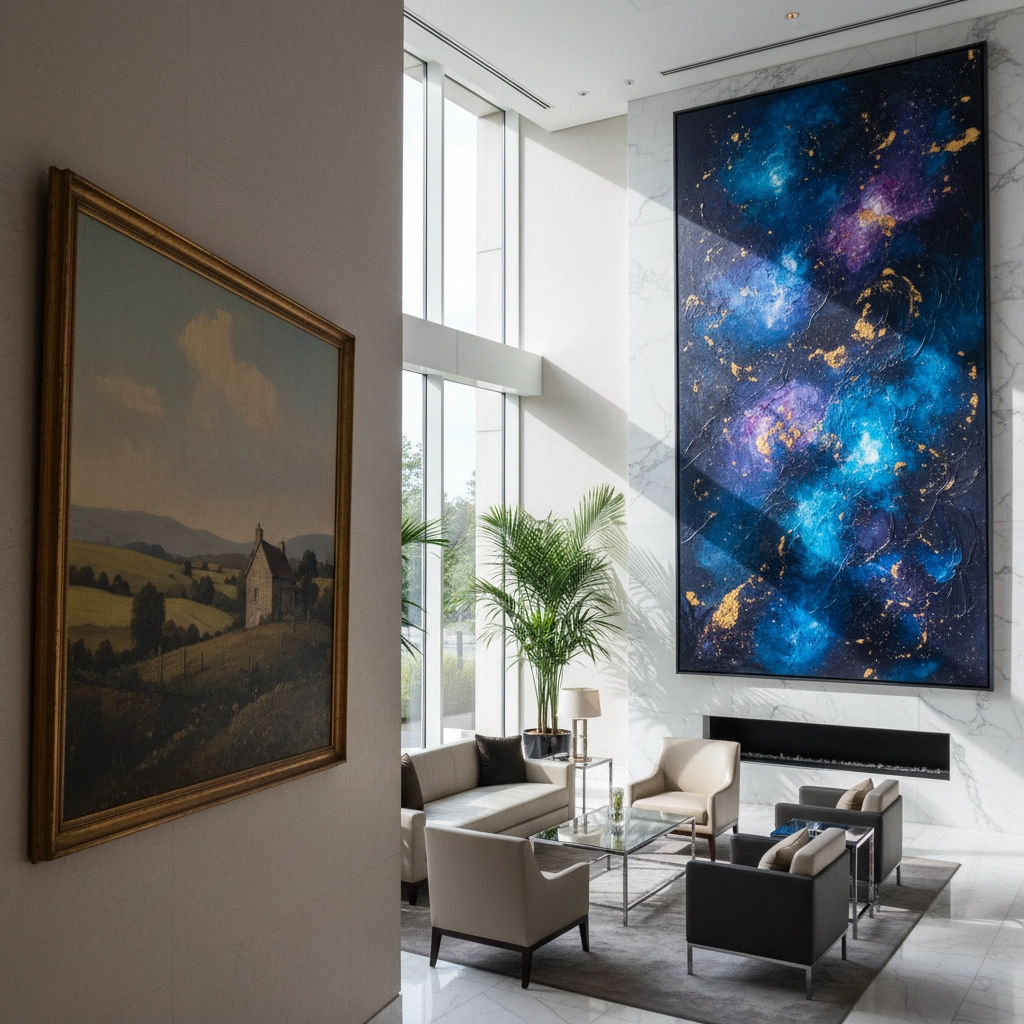
The traditional model of hotel art procurement, characterized by bulk purchasing of neutral, inoffensive prints designed to avoid controversy rather than create engagement, fails to meet contemporary travelers' expectations for authentic and memorable experiences. Research indicates that modern guests actively seek environments that provide visual stimulation and cultural authenticity, rendering generic artwork counterproductive to hospitality objectives.
Emergence of Statement Art in Luxury Hospitality
Large-scale statement pieces have emerged as the foundational element of contemporary hospitality design, with properties incorporating full-wall art installations that create immersive environmental experiences. These oversized prints, murals, and multi-panel artworks serve to anchor lobbies, dining areas, and high-traffic zones while making definitive statements about brand identity and guest experience priorities.
The transition toward statement artwork reflects broader changes in hospitality space utilization, particularly in lobby areas that now function as workspaces, social hubs, and dining venues. Art placement has evolved from decorative afterthought to strategic space planning tool that defines different zones within multi-use environments.
Hotels investing in bespoke and locally-inspired artwork demonstrate superior performance in guest experience metrics while achieving greater differentiation in competitive markets. From stylized architectural drawings of city landmarks to modernized botanical prints highlighting regional flora, establishments create authentic sense of place through carefully curated visual narratives.
Space-Themed Art as Strategic Design Choice
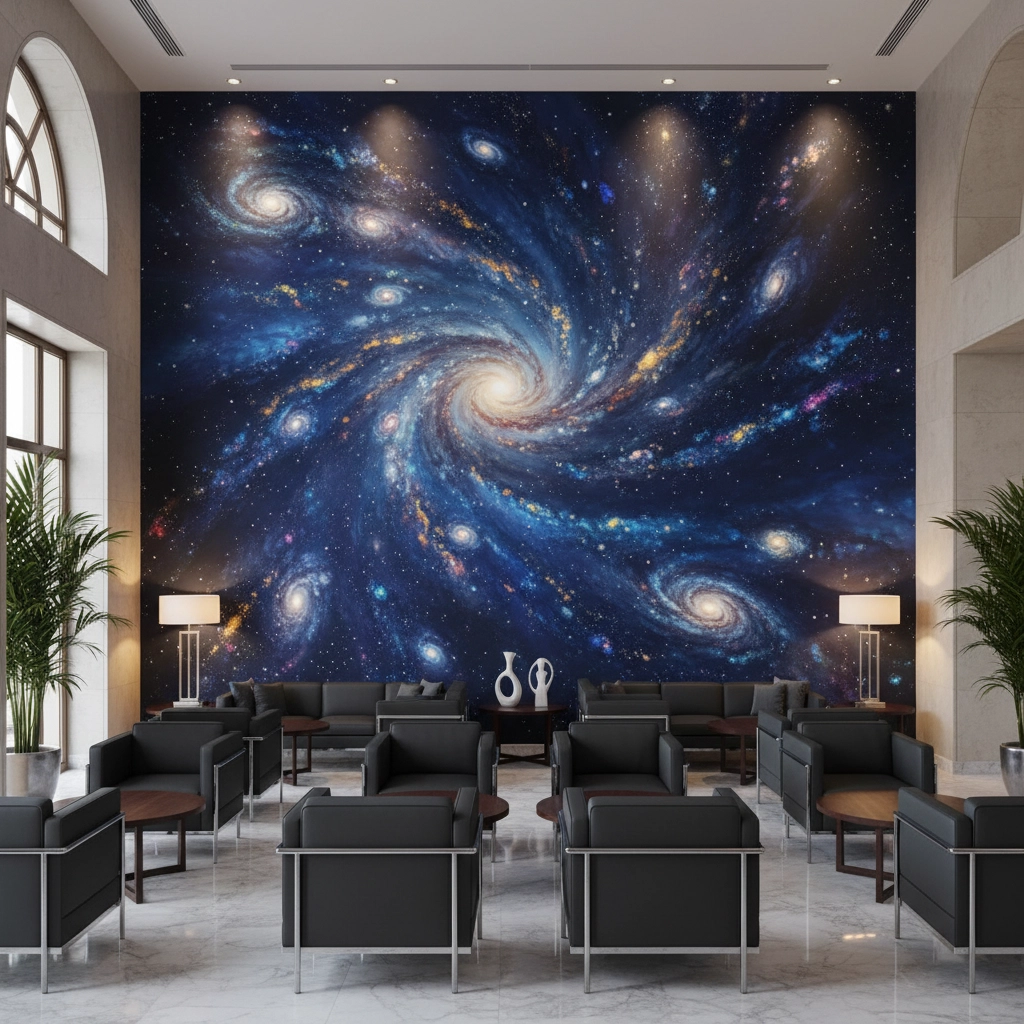
While comprehensive industry data does not establish space-themed statement pieces as the dominant trend across luxury hospitality, celestial and cosmic-inspired artwork represents a significant subset of the broader movement toward immersive visual experiences. Hotels incorporating space-themed elements often cite the universal appeal of celestial imagery and its capacity to create contemplative, aspirational environments.
Properties utilizing space-themed artwork typically emphasize the psychological impact of cosmic imagery on guest relaxation and wonder. The infinite nature of space visuals provides natural conversation starters while creating environments that encourage reflection and escape from urban pressures. These installations often incorporate advanced lighting systems and textural elements that enhance the immersive qualities of the artwork.
Textural Innovation in Hospitality Art
Contemporary hospitality art trends prioritize textural complexity and layered visual experiences over traditional flat print formats. Hotels increasingly incorporate artwork featuring raised surfaces, mixed media applications, and interactive elements that encourage tactile engagement and create multi-sensory experiences for guests.

The emphasis on textural artwork aligns with broader hospitality design principles focused on creating environments that engage multiple senses simultaneously. Properties report that textured art installations generate higher levels of guest interaction and social media engagement compared to traditional flat artwork, providing measurable marketing value beyond aesthetic contribution.
Cultural Integration and Local Relevance
Successful hospitality art programs demonstrate clear connections between artwork selection and local cultural contexts, moving beyond generic themes toward region-specific visual narratives. Properties incorporating locally-sourced materials, cultural motifs, and historical references achieve superior guest satisfaction ratings while supporting regional artistic communities.
The integration of cultural elements in hospitality art serves dual purposes of enhancing authentic guest experiences while differentiating properties from competitors utilizing standardized design approaches. Hotels report that culturally-integrated artwork generates positive guest feedback and contributes to repeat visitation patterns.
Technology Integration in Contemporary Hotel Art
Modern hospitality establishments increasingly incorporate digital art installations and interactive visual elements that respond to guest presence or environmental conditions. These technological integrations represent significant departures from static print artwork while offering opportunities for dynamic content updates and seasonal customization.
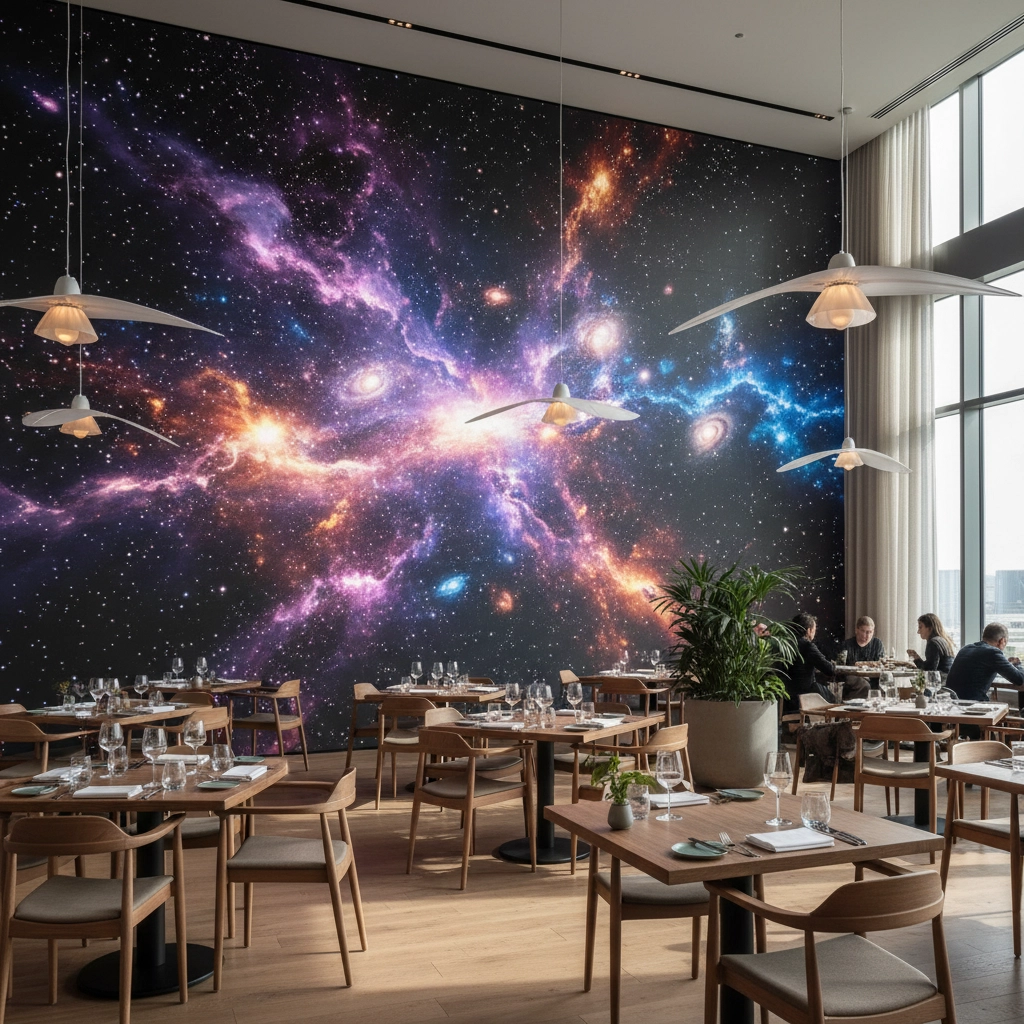
Digital art systems enable properties to modify visual content based on events, seasons, or specific guest demographics while maintaining consistent aesthetic quality and brand alignment. The flexibility of digital installations provides long-term value that justifies higher initial investment costs compared to traditional static artwork.
Business Impact of Strategic Art Investment
Financial analysis demonstrates that hotels investing in quality statement artwork achieve measurable improvements in guest satisfaction scores, online review ratings, and booking conversion rates. The correlation between artistic investment and business performance supports the strategic value of comprehensive art curation programs.
Properties utilizing professional art consultants and curated collection strategies report average increases in guest satisfaction ratings ranging from 15-25% compared to establishments maintaining generic artwork approaches. These improvements translate directly into revenue advantages through increased repeat bookings and premium pricing capabilities.
Implementation Strategies for Hospitality Art Transformation
Successful transition from generic hotel art to statement pieces requires systematic planning that considers space utilization, brand identity, and guest demographic preferences. Properties achieving optimal results typically engage professional art consultants while maintaining clear budgetary parameters and installation timelines.
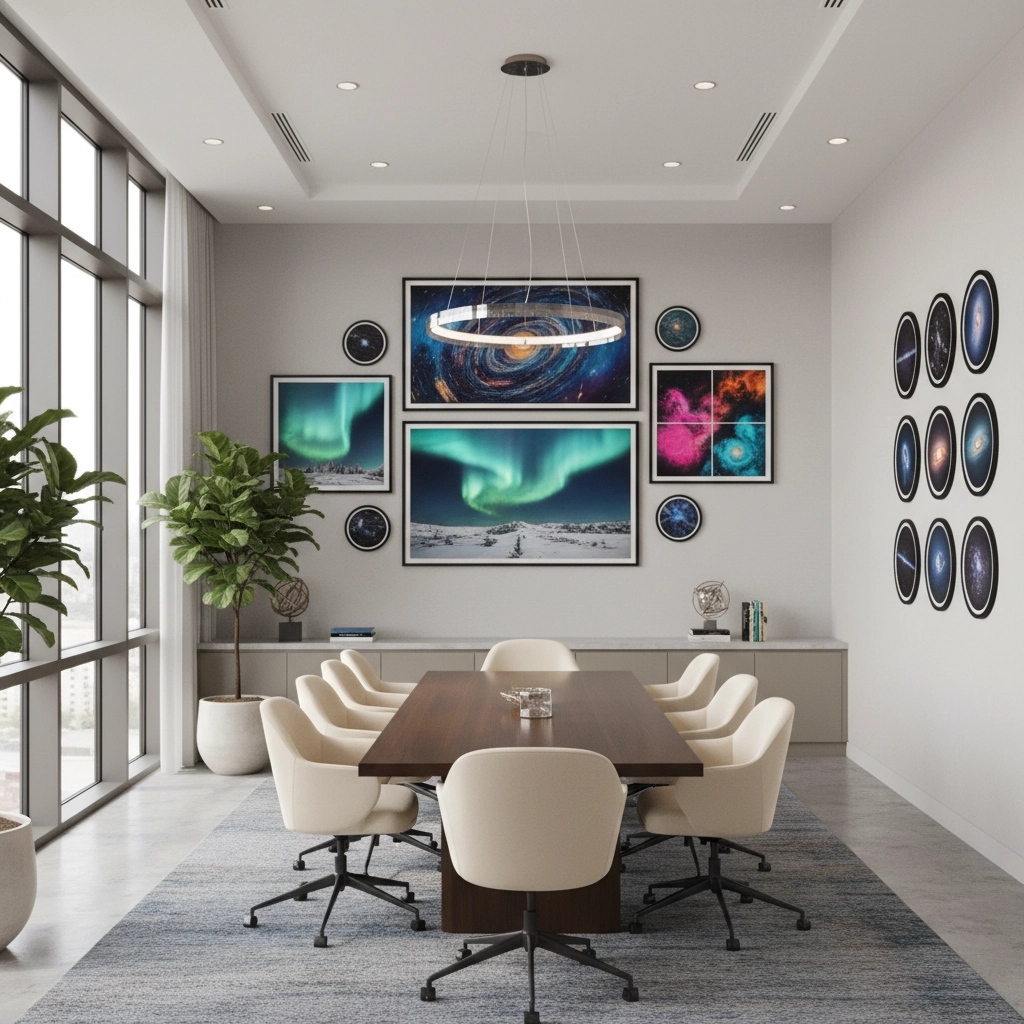
The procurement process for statement hospitality art involves evaluation of artist credentials, material durability specifications, and maintenance requirements that differ significantly from traditional print artwork considerations. Hotels must account for installation complexity, insurance requirements, and long-term preservation costs when evaluating statement art investments.
Market Response and Guest Reception
Guest feedback regarding the transition from generic hotel art to statement pieces demonstrates overwhelmingly positive reception, with travelers frequently citing unique artwork as factors influencing property selection and recommendation behaviors. Social media engagement metrics show significant increases in guest-generated content featuring distinctive hotel artwork installations.
The measurable guest response to quality hospitality art validates industry investment in statement pieces while providing competitive advantages in markets where visual differentiation influences booking decisions. Properties maintaining generic artwork approaches increasingly face disadvantages in guest perception and market positioning.
Contemporary luxury hospitality demands artistic strategies that transcend traditional generic print approaches through statement pieces that create memorable guest experiences while supporting brand differentiation objectives. Whether incorporating space-themed elements or pursuing alternative artistic directions, successful properties prioritize authentic visual narratives that engage guests and contribute measurably to business performance.
For hospitality operators evaluating art procurement strategies, the evidence clearly supports investment in curated statement pieces over generic alternatives, with documented improvements in guest satisfaction, brand loyalty, and revenue generation justifying the strategic approach to hospitality art as essential operational consideration rather than optional aesthetic enhancement.
Visit Art Clouds to explore statement art solutions specifically designed for luxury hospitality environments, where authentic visual experiences meet strategic business objectives through carefully curated artistic partnerships.