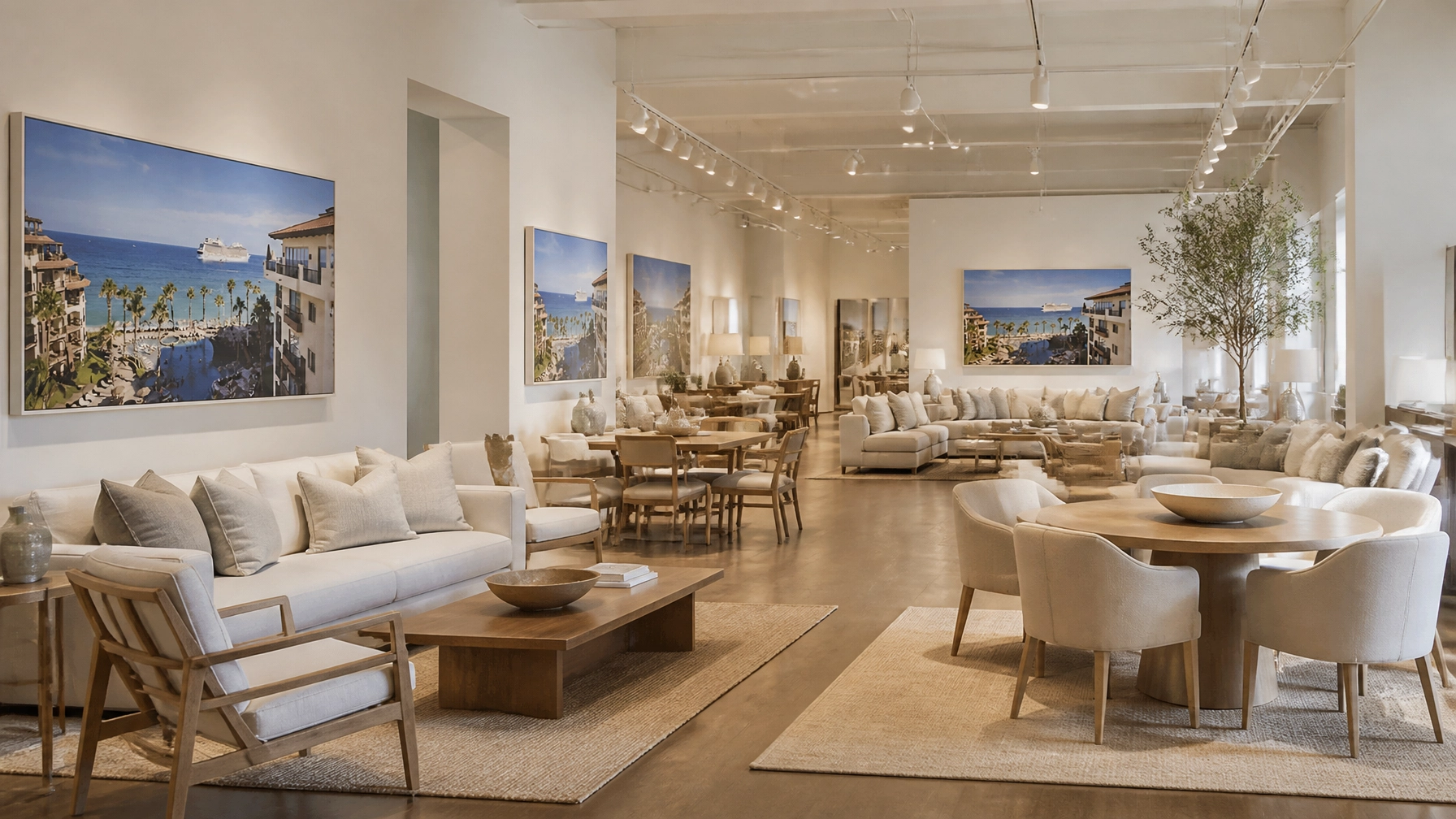
Seven Secrets Furniture Buyers Use When Sourcing Sky and Space Art for Multi-Showroom Programs
Most furniture retailers treat showroom artwork as a finishing detail until they calculate the operational value of a coordinated art program. For multi-location retailers and interior design teams, sky and space art can provide more than visual appeal: it can support brand consistency, simplify procurement, improve showroom atmosphere, and create repeatable specifications across an expanding portfolio.
The following seven sourcing principles help furniture buyers evaluate artwork as part of a broader commercial program, with attention to durability, scalability, customization, bulk ordering, and return on investment.
1. They begin with a collection, not isolated images
A multi-showroom program should not depend on unrelated artwork selected one piece at a time. Buyers generally begin by defining a visual collection that can be repeated, adapted, and extended across locations.
Sky, ocean, cloud, and space imagery are useful in this context because the subject matter can remain consistent while the individual scenes vary. One showroom may use a coastal image with open blue space, while another may use a mountain stream or celestial composition, yet both can remain within the same broader design language.
The Ocean Scenes collection from Art Clouds provides an example of this approach, offering a category that can support resort-inspired, coastal, transitional, and contemporary showroom environments.
A collection-based brief should identify:
- Core colors and secondary accent colors
- Preferred image subjects and levels of visual activity
- Standard frame or edge treatments
- Approved sizes and orientations
- Suitable locations within each showroom
- Images reserved for feature walls or entry zones
This method reduces design inconsistency and makes future reordering more manageable.

Oceanfront Resort with Passing Cruise Ship can support coastal, resort, and hospitality-inspired furniture vignettes. View the artwork.
2. They specify materials according to showroom conditions
A visually appropriate image is only one part of a commercial purchase decision. Furniture showrooms experience frequent cleaning, regular customer traffic, changing displays, direct or indirect sunlight, and repeated handling during floor resets. Artwork should therefore be evaluated by material, finish, frame construction, hanging method, and maintenance requirements.
Art Clouds identifies several available presentation formats, including canvas, metal, acrylic, wallpaper, and other print options. The correct choice depends on the placement and operating conditions.
For example:
- Canvas may suit soft, residential-style vignettes where texture is part of the design direction.
- Metal or acrylic may provide a clean, contemporary appearance for modern furniture collections.
- Framed prints can create a more traditional or elevated presentation.
- Wallpaper or large-format applications may be considered for feature walls where a continuous visual statement is required.
Procurement teams should request current specifications before issuing a purchase order. Important questions include whether the finish is suitable for the expected light exposure, how the surface should be cleaned, whether replacement components are available, and how the artwork will be packaged for shipment.
Durability should be understood as a lifecycle consideration rather than a single product feature. A slightly higher initial cost may be justified when it reduces handling damage, replacement frequency, installation problems, or visual deterioration.
3. They create a repeatable size and placement system
A multi-showroom art program becomes more efficient when each location uses a common sizing framework. Without one, buyers may face a series of one-off decisions involving measurements, frames, freight, installation, and replacement orders.
A practical system can include three levels:
- Feature scale: large-format artwork for entry walls, central sightlines, and major furniture groupings.
- Supporting scale: medium artwork for living room, bedroom, dining, or office vignettes.
- Detail scale: smaller pieces for corridors, consultation areas, accessory displays, and secondary walls.
The exact dimensions should be determined by the wall conditions and furniture layouts, but the categories can remain consistent across the retail network.
This system also allows local flexibility. A smaller urban showroom may use a vertical or panoramic version of a collection, while a larger suburban location may use a wider feature image. Consistency is maintained through the subject, color palette, frame language, and placement logic rather than through identical dimensions everywhere.
For interior designers, this creates a clearer specification schedule. For purchasing teams, it simplifies quotes, purchase orders, inventory planning, and future replenishment.
4. They use customization where it produces the greatest value
Customization is most effective when it solves a defined commercial problem. It should not be applied indiscriminately, because custom sizing, framing, cropping, and finishing may affect production time and cost.
For multi-showroom programs, useful customization may include:
- Adjusting the crop to fit a specific wall proportion
- Selecting horizontal, vertical, square, or panoramic formats
- Coordinating frame colors with the retailer’s furniture finishes
- Creating larger feature pieces for flagship locations
- Producing a consistent image family in different sizes
- Developing a visual package for a new showroom concept
A strong program often combines standard pieces with limited customization. Core images can be ordered repeatedly for cost and consistency, while customized applications are reserved for high-visibility areas such as entrances, central display walls, and executive design studios.
The Art Clouds image Tropical Resort Framed by Ocean Views illustrates how a clear visual theme can be adapted to furniture environments that use natural materials, light upholstery, tropical accents, or resort-style merchandising.

Tropical Resort Framed by Ocean Views offers a calm, open composition for residential furniture displays and resort-inspired interiors. View the artwork.
5. They plan bulk orders around the rollout schedule
Bulk ordering is not simply a request for a lower unit price. It is a coordinated process involving quantities, specifications, delivery addresses, installation dates, inspection procedures, and replacement planning.
Before requesting a quotation, buyers should prepare a consolidated schedule that includes:
- Artwork title or reference
- Quantity by showroom
- Size and orientation
- Material and finish
- Frame requirements
- Delivery address for each location
- Required delivery window
- Installation responsibility
- Replacement or overage requirements
Consolidating this information gives the supplier a clearer production brief and gives the buyer a stronger basis for comparing total project costs.
Where possible, buyers should also coordinate art delivery with furniture installation and showroom merchandising. Artwork arriving too early may require temporary storage and additional handling. Artwork arriving too late can delay photography, opening events, or the final presentation of a furniture collection.
Purchase orders should include approved images, dimensions, finishes, quantities, prices, and delivery terms. Any changes should be documented in writing to limit confusion between design, purchasing, receiving, and installation teams.
6. They connect artwork to the showroom brand
Furniture retailers are not only selling individual products. They are presenting a lifestyle, a standard of quality, and a particular view of how spaces should function. Artwork helps establish that context.
Sky and space imagery is adaptable because it can communicate openness, calm, movement, exploration, or modernity without competing with the furniture itself. A quiet ocean horizon can give a room an expansive quality. A dramatic cloud formation can add scale to a neutral wall. A space image can support a technology-forward or contemporary collection.
The most effective programs coordinate art with:
- Upholstery colors
- Wood and metal finishes
- Lighting temperature
- Flooring and wall colors
- Regional showroom identity
- Customer demographic and price point
A retailer may maintain a national core collection while allowing limited regional variation. Coastal markets might emphasize ocean scenes, while mountain or urban markets could use landscape or space imagery. The result is a recognizable brand atmosphere with enough variation to prevent every showroom from appearing identical.
Additional guidance for commercial applications is available through the Art Clouds article Transforming Commercial Interiors with Sky and Space Art: A Guide for Bulk Buyers.

Mountain Stream Through the Valley can introduce natural movement and visual depth into a showroom program without overwhelming nearby furniture displays. View the artwork.
7. They measure return on investment beyond the initial price
The purchase price of artwork is only one part of the investment. Multi-showroom buyers should also consider the cost of sourcing, design labor, freight, storage, installation, replacement, and future reordering.
A practical ROI review can track:
- Cost per showroom and cost per display zone
- Freight and installation costs
- Damage or replacement rates
- Time required to reorder approved pieces
- Customer response to coordinated furniture vignettes
- Sales performance in areas with complete room presentations
- Use of the same artwork across multiple design concepts
- Reduction in design and purchasing time through standardized specifications
Artwork may also support cross-merchandising. When wall art, furniture, lighting, rugs, and accessories are presented as a coherent setting, the showroom communicates a more complete solution. This can help customers understand how products work together, while giving sales teams additional context for discussing the room as a whole.
The financial case should remain evidence-based. Not every wall requires a premium feature piece, and not every location needs the same quantity. The goal is to place the right visual investment where it supports the showroom experience, protects the brand standard, and remains practical to maintain.
A practical sourcing checklist
Before approving a sky and space art program, furniture buyers and interior designers should confirm:
- The collection aligns with the retailer’s brand and furniture categories.
- Materials and finishes are appropriate for showroom conditions.
- Sizes and orientations match a repeatable placement system.
- Customization is limited to high-impact applications.
- Bulk quantities and delivery addresses are documented.
- Lead times coordinate with furniture and store rollout schedules.
- Replacement and reordering procedures are clear.
- The program can be evaluated through measurable operating and sales indicators.
For collection planning, commercial sizing, or bulk purchasing questions, review the Art Clouds homepage or use the contact page. Please login to post a comment or submit a project inquiry with showroom count, preferred imagery, approximate dimensions, and intended delivery schedule.
Administrative note: Product availability, materials, dimensions, pricing, production times, and shipping terms may change. Buyers should confirm current specifications and commercial order requirements with Art Clouds before placing an order.