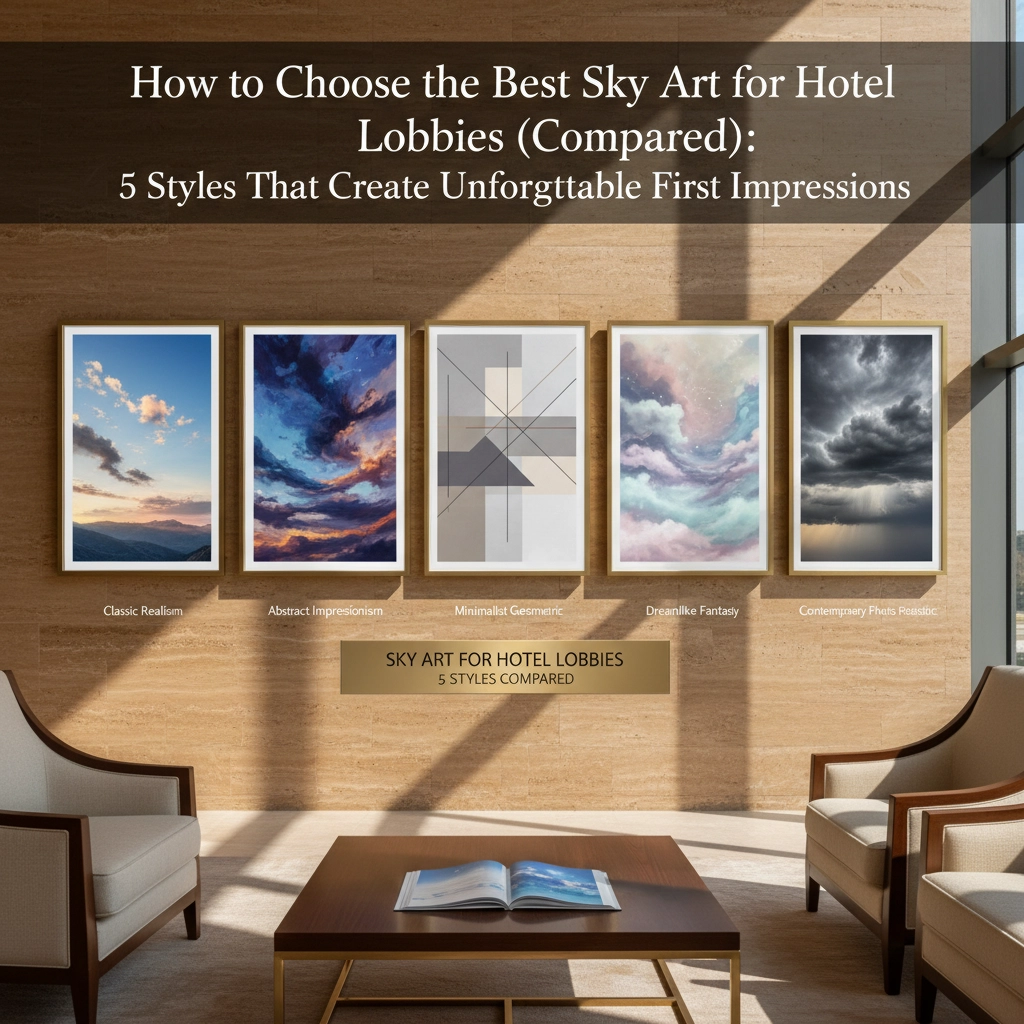
How to Choose the Best Sky Art for Hotel Lobbies (Compared): 5 Styles That Create Unforgettable First Impressions
Hotel lobby design fundamentally determines the first impression guests form, with carefully selected artwork serving as the cornerstone of memorable hospitality experiences. Sky-themed art emerges as particularly effective in creating atmospheres of openness, tranquility, and sophistication that resonate across diverse cultural backgrounds and aesthetic preferences.
The selection process for optimal sky art requires systematic evaluation of multiple factors, including visual impact, brand alignment, maintenance considerations, and long-term aesthetic value. Understanding the distinct characteristics of different sky art styles enables informed decision-making that maximizes both immediate visual appeal and sustained guest satisfaction.
Realistic Sky Photography: Authentic Natural Beauty
Realistic sky photography represents the most straightforward approach to incorporating celestial themes into hotel lobby environments. This style captures actual cloud formations, atmospheric conditions, and natural lighting phenomena through high-quality photographic processes that preserve authentic detail and color accuracy.
The primary strength of realistic sky photography lies in its immediate recognizability and emotional accessibility. Guests instinctively connect with familiar natural imagery, creating subconscious associations with freedom, travel, and positive experiences. Large-format installations particularly excel in expansive lobby spaces where the scale can match the grandeur of actual skies.
Professional sky photography offers versatility in representing different moods and atmospheres. Dawn imagery conveys hope and new beginnings, while sunset photographs evoke relaxation and reflection. Storm photography can create dramatic focal points, though such selections require careful consideration of overall brand messaging and guest comfort levels.
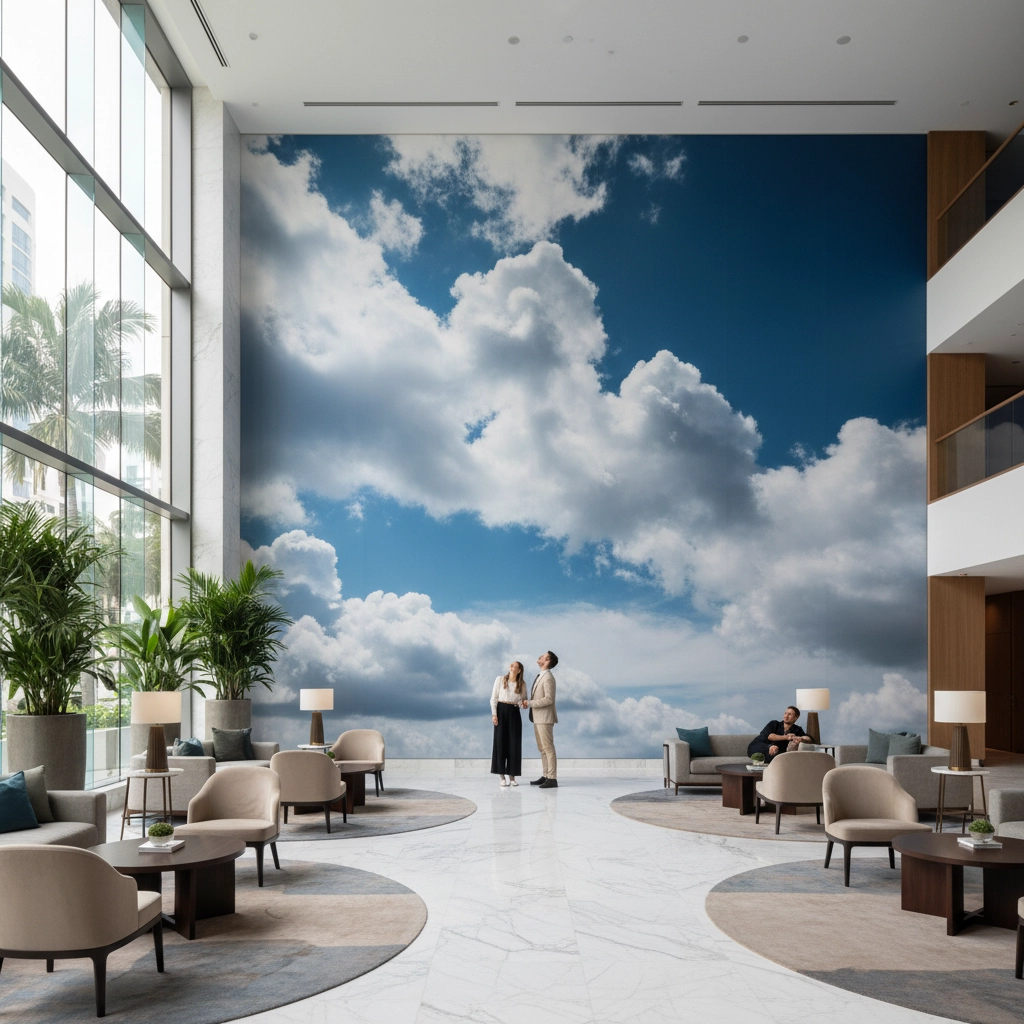
However, realistic photography presents certain limitations that must be acknowledged. The literal nature of photographic representation may appear too predictable for hotels seeking distinctive artistic identity. Additionally, maintaining visual impact over extended periods can prove challenging as familiarity reduces the initial impression strength.
Quality considerations become paramount with realistic sky photography, as technical deficiencies in printing, mounting, or lighting can significantly diminish the intended effect. Investment in professional-grade materials and installation processes represents essential requirements for achieving desired outcomes.
Abstract Sky Interpretations: Artistic Expression and Sophistication
Abstract sky art transforms recognizable celestial elements into interpretive compositions that maintain thematic connection while offering enhanced creative flexibility. This approach enables customization of color palettes, compositional arrangements, and stylistic elements to align precisely with specific brand requirements and interior design schemes.
The sophistication inherent in abstract interpretation appeals particularly to upscale clientele who appreciate artistic nuance and creative expression. Such pieces function effectively as conversation starters while avoiding the potential monotony associated with purely representational imagery. The interpretive nature allows for cultural adaptation and personalized branding that photographic approaches cannot accommodate.
Abstract sky art demonstrates remarkable longevity in aesthetic appeal, as artistic interpretation tends to age more gracefully than literal representation. The subjective nature of abstract composition enables continued discovery and appreciation over extended viewing periods, maintaining guest interest through repeated encounters.
Color customization represents a significant advantage of abstract sky art, allowing precise matching of existing interior color schemes or brand-specific palettes. This flexibility facilitates comprehensive design integration that enhances overall environmental cohesion rather than competing with existing elements.
Nevertheless, abstract interpretation requires careful selection to ensure broad appeal while avoiding overly complex or controversial artistic statements. The subjective nature that provides creative freedom also introduces risk of misinterpretation or negative guest reactions, necessitating thorough evaluation during the selection process.
Minimalist Sky Compositions: Clean Contemporary Aesthetics
Minimalist sky art embraces simplified forms, reduced color palettes, and clean compositional arrangements that align with contemporary design sensibilities. This approach emphasizes subtle suggestion rather than detailed representation, creating sophisticated visual environments that complement rather than dominate interior spaces.
The versatility of minimalist sky art makes it particularly suitable for hotels with evolving design requirements or multiple property types within a single brand. The restrained aesthetic adapts effectively to various lighting conditions, seasonal decorative changes, and furniture arrangements without requiring significant environmental modifications.
Maintenance advantages distinguish minimalist compositions from more complex artistic approaches. The simplified visual elements typically require less specialized cleaning procedures and demonstrate greater resistance to visual degradation over time. This practical consideration represents significant long-term value in commercial hospitality environments.
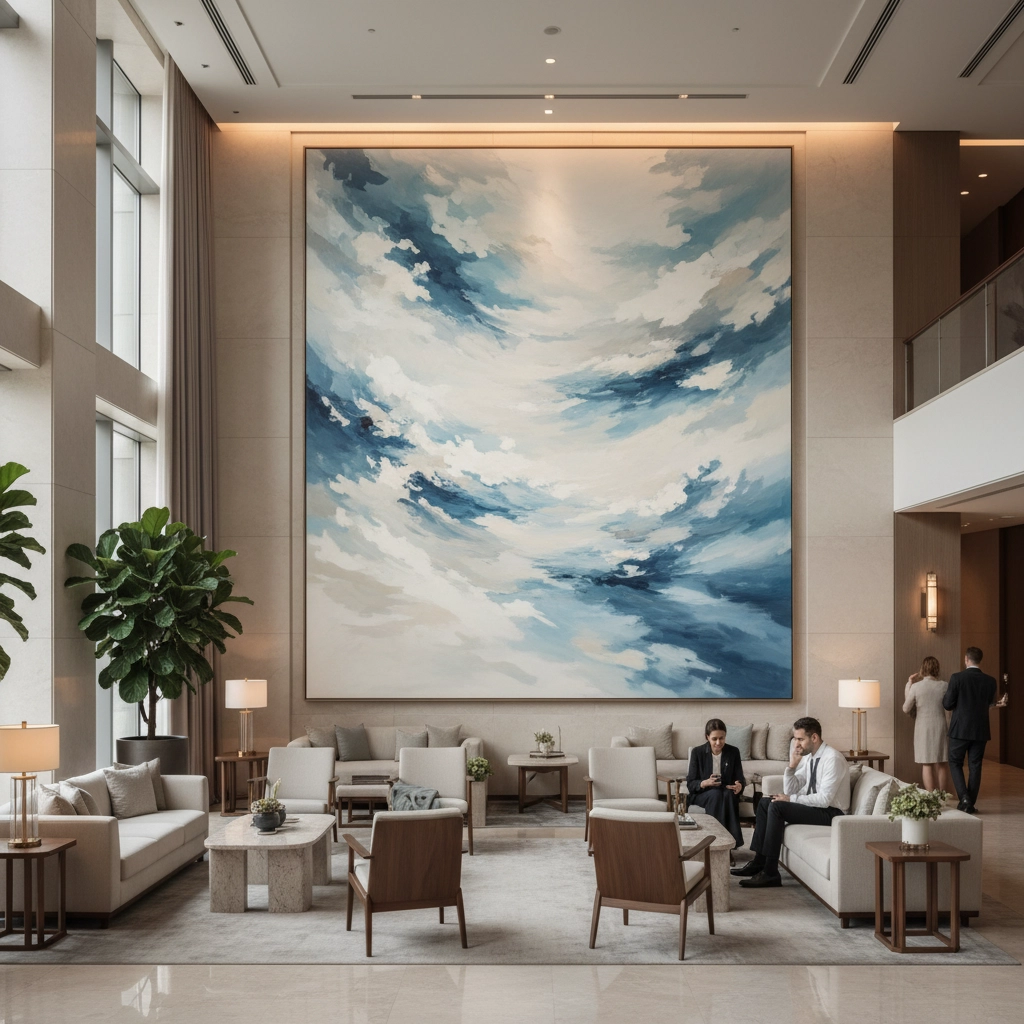
Minimalist sky art excels in creating calming environments that support guest relaxation without overwhelming sensory input. The subtle presence allows other design elements, architectural features, and hospitality services to maintain prominence while contributing essential visual interest and thematic coherence.
The primary limitation of minimalist approaches involves potential insufficient visual impact for hotels requiring bold first impressions or dramatic focal points. The intentional restraint that creates sophisticated appeal may prove inadequate for properties competing in markets where immediate visual impact determines guest perception and selection.
Dramatic Storm and Sunset Imagery: Maximum Visual Impact
Dramatic sky art featuring storm formations, sunset colors, or other intense atmospheric phenomena creates immediate visual impact that commands attention and generates strong emotional responses. This approach maximizes the impression-making potential of lobby art through bold colors, dynamic compositions, and inherent natural drama.
The memorability factor associated with dramatic sky imagery provides significant marketing value, as guests frequently recall and discuss striking visual elements encountered during their stays. Social media sharing potential increases substantially with visually dramatic installations that provide compelling photographic opportunities for guest documentation.
Dramatic sky art effectively establishes bold brand personalities and differentiates properties within competitive markets. The inherent energy and visual excitement align particularly well with resort properties, boutique hotels, or establishments targeting guests seeking memorable experiential elements rather than conservative comfort.
Seasonal adaptability represents an additional advantage of dramatic sky themes, as storm imagery can complement autumn and winter seasons while sunset compositions align with summer and spring periods. This natural rotation potential enables refreshed visual environments without complete artwork replacement.
However, the intensity that creates impact also introduces risk of overwhelming smaller spaces or competing with other design elements for visual dominance. Careful space planning and complementary design selection become essential requirements for successful dramatic sky art integration.
Celestial and Night Sky Themes: Universal Wonder and Sophistication
Celestial art incorporating stars, constellations, aurora phenomena, or other night sky elements creates sophisticated atmospheres that evoke wonder while maintaining broad cultural appeal. This approach transcends specific geographic or cultural associations, making it particularly suitable for international hotel brands or properties serving diverse guest populations.
The inherent mystery and beauty of celestial themes generate positive emotional responses across age groups and cultural backgrounds, creating inclusive environments that welcome all guests equally. The association with exploration, dreams, and infinite possibilities aligns effectively with hospitality industry objectives of inspiring and delighting visitors.
Technology integration opportunities distinguish celestial art from other sky art categories, as LED lighting, fiber optic elements, or other illumination technologies can enhance night sky themes with dynamic effects that change throughout daily cycles. Such installations create unique experiences that differentiate properties through innovative artistic presentation.
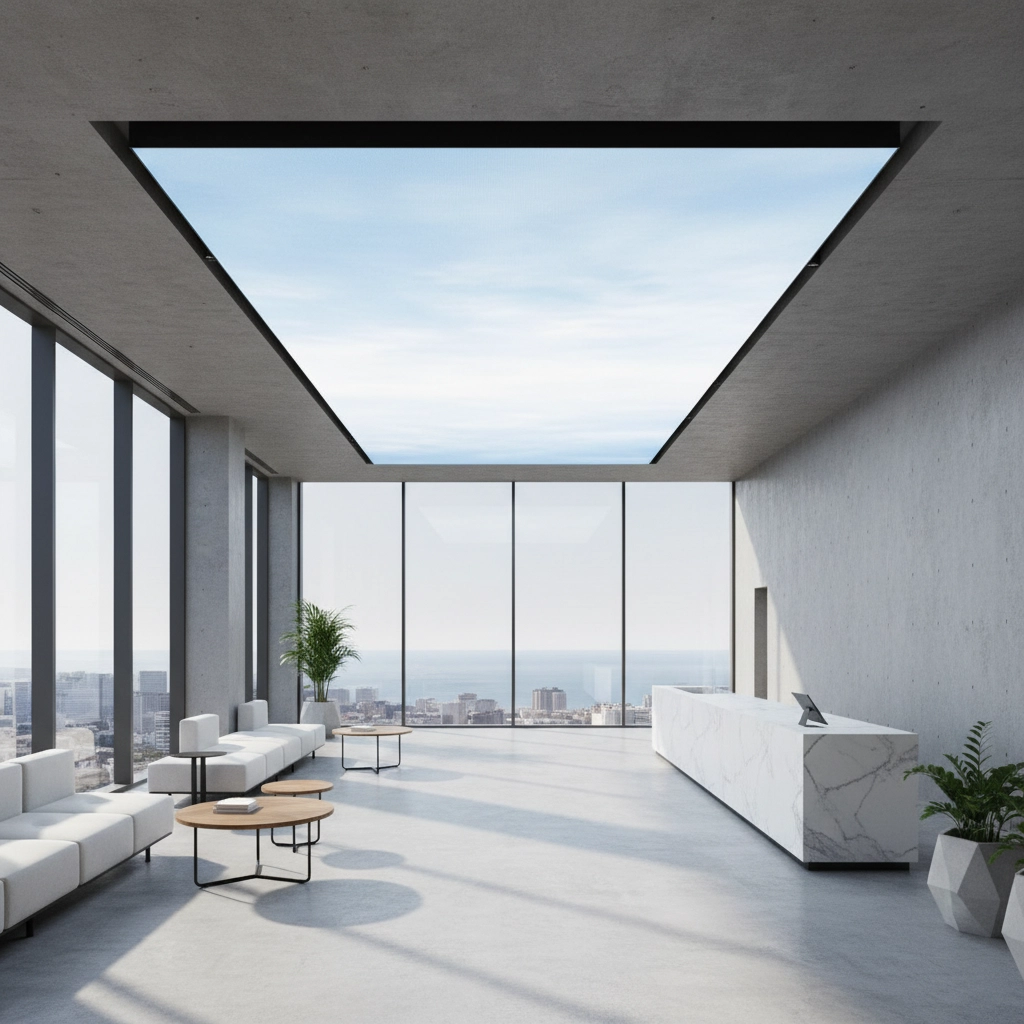
The timeless nature of celestial themes provides long-term aesthetic value that transcends temporary design trends or seasonal variations. Stars, constellations, and cosmic phenomena maintain consistent appeal across decades, representing sound investments in permanent artistic installations.
Lighting considerations become particularly important with celestial-themed installations, as the darker color palettes and nighttime associations require careful illumination design to maintain appropriate lobby brightness while preserving artistic integrity and visual impact.
Comparative Analysis and Selection Framework
The selection of optimal sky art style requires systematic evaluation across multiple criteria including visual impact intensity, versatility across different interior designs, maintenance requirements, cost considerations, and alignment with specific brand positioning strategies.
Visual impact assessment must balance immediate impression strength with long-term viewing satisfaction. Dramatic styles excel in creating memorable first encounters but may prove visually fatiguing over extended exposure periods. Conversely, minimalist approaches provide sustained comfort but may fail to generate the immediate recognition essential for competitive differentiation.
Versatility evaluation considers adaptability to lighting changes, seasonal decorative modifications, and potential future renovations. Abstract and minimalist styles typically demonstrate superior flexibility, while realistic photography and dramatic themes may require more restrictive environmental conditions for optimal presentation.
Maintenance factors include cleaning requirements, potential for damage or fading, and replacement complexity. Photographic prints generally require more careful handling than painted or printed abstract compositions, while dramatic pieces may show wear more readily than minimalist alternatives.
Cost analysis must encompass initial acquisition, professional installation, ongoing maintenance, and potential replacement expenses. Custom abstract pieces typically command premium pricing, while high-quality photography may offer more predictable cost structures for multiple installations across property portfolios.
Implementation Recommendations and Best Practices
Successful sky art integration requires comprehensive planning that addresses technical installation requirements, lighting design coordination, and long-term maintenance protocols. Professional consultation during selection and installation phases ensures optimal results and maximizes investment value.
Size and scale considerations must account for viewing distances, ceiling heights, and visual competition from other lobby elements. Oversized installations often prove more effective than multiple smaller pieces in creating desired impact and establishing clear focal points within complex environments.
Quality specifications should emphasize professional-grade materials, UV protection, and commercial-grade mounting systems designed for high-traffic environments. These technical considerations directly influence longevity and maintain visual appeal throughout extended service periods.
Regular evaluation and refreshment planning ensure continued effectiveness of artistic installations while providing opportunities for brand evolution and guest experience enhancement. Systematic documentation of guest responses and staff observations inform future selection decisions and optimization strategies.
The strategic selection of sky art for hotel lobbies represents a critical investment in guest experience and brand differentiation that requires careful consideration of aesthetic, practical, and strategic factors to achieve optimal results.