The Ultimate Guide to Celestial Art: Everything Hotels Need to Create Mood-Enhancing Guest Experiences
The hospitality industry increasingly recognizes that exceptional guest experiences extend far beyond comfortable accommodations and attentive service. Hotels that differentiate themselves in competitive markets understand that strategic art implementation, particularly celestial-themed installations, creates transformative environments that elevate guest satisfaction and drive repeat bookings. Celestial art represents one of the most powerful design approaches for creating mood-enhancing spaces that transport guests beyond ordinary hospitality experiences.
Understanding Celestial Art's Impact on Guest Experience
Art functions as a catalyst for emotional engagement within hospitality environments, serving purposes that extend far beyond decorative enhancement. Research demonstrates that thoughtfully curated artistic elements possess the remarkable ability to transform ordinary spaces into extraordinary experiences, sparking curiosity, igniting conversations, and creating lasting memories that remain with guests long after departure.
Celestial themes tap into humanity's fundamental fascination with cosmic phenomena, evoking feelings of wonder, tranquility, and transcendence that profoundly impact guest satisfaction metrics. The psychological influence of stellar motifs, lunar imagery, and constellation patterns creates an immediate sense of escape from terrestrial concerns, allowing guests to feel connected to something greater while experiencing premium hospitality services.
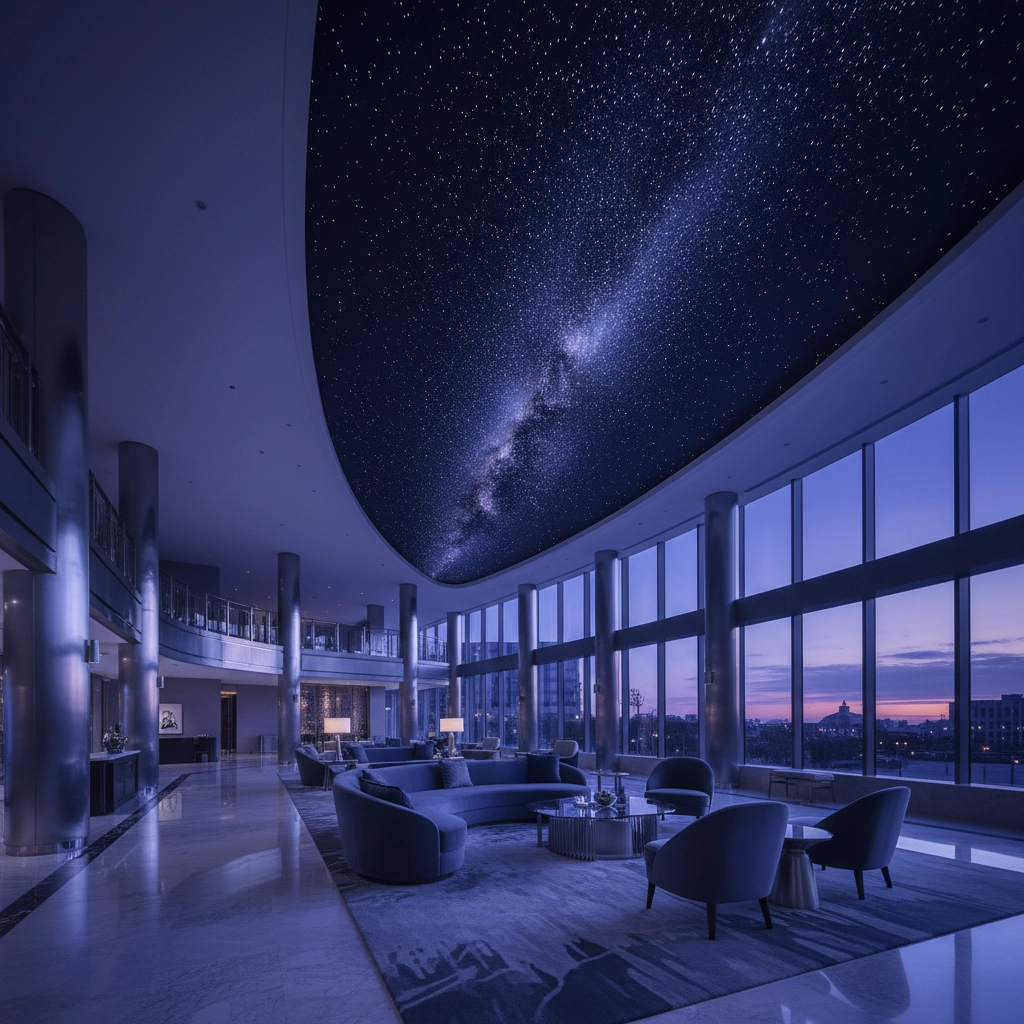
The emotional power of celestial art extends beyond aesthetic appreciation, as it demonstrates the ability to evoke specific feelings, stimulate imagination, and transport guests to different experiential realms. Hotels incorporating cosmic elements create distinctive atmospheres that differentiate their properties from competitors while establishing memorable brand identities.
Core Design Principles for Celestial Hotel Spaces
Establishing unique property identity through celestial art requires understanding fundamental design principles that maximize visual impact while maintaining sophisticated elegance. The integration process involves creating cohesive narratives that guide guests through carefully orchestrated experiences, from lobby entrance to private accommodations.
Successful celestial implementations focus on creating the right ambiance while establishing distinctive property character. This approach requires balancing dramatic visual elements with practical functionality, ensuring that artistic installations enhance rather than overwhelm guest comfort. Hotels must consider how celestial themes interact with existing architectural features, local cultural elements, and target demographic preferences.
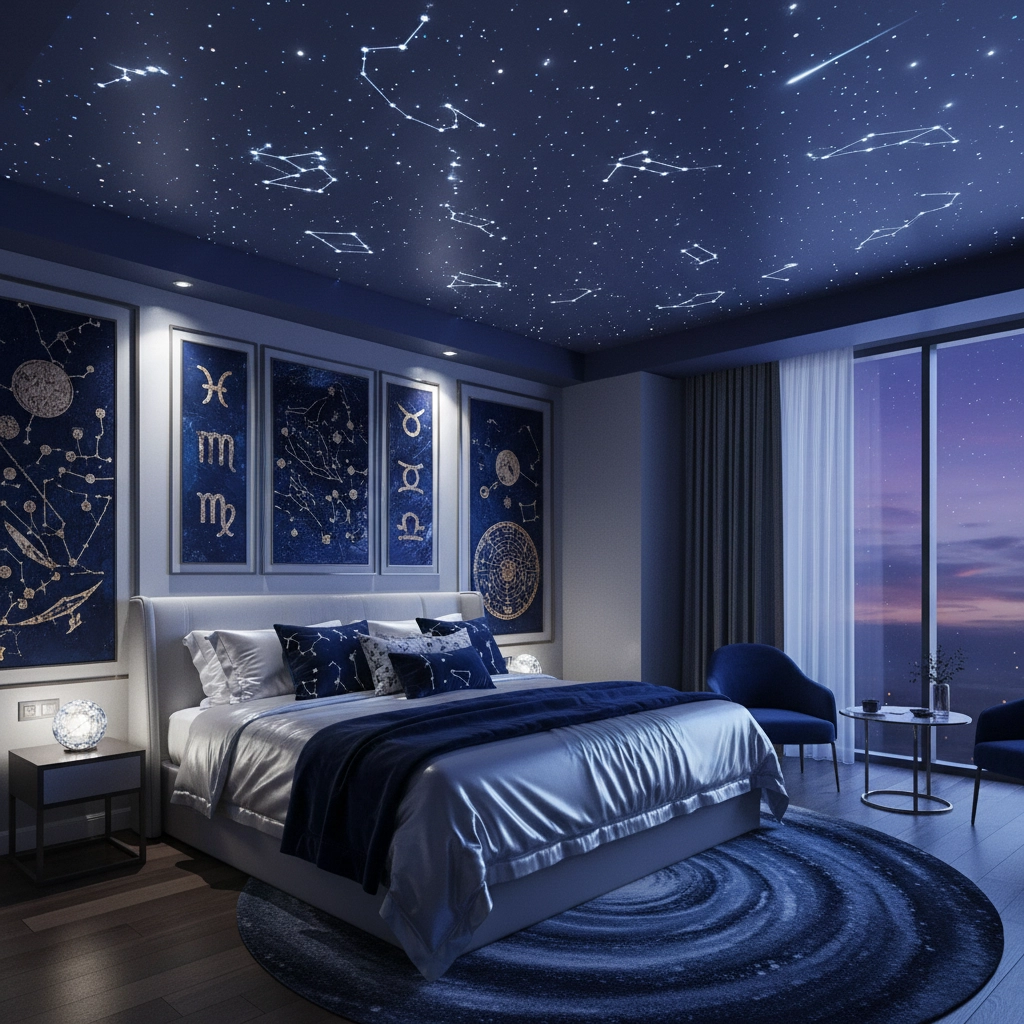
Color palettes for celestial designs typically incorporate deep blues, silvery grays, rich purples, and metallic accents that reflect cosmic phenomena. These selections create sophisticated environments that feel both luxurious and otherworldly, appealing to guests seeking unique experiential accommodations.
Strategic Lighting Implementation
Mood lighting serves as the foundation for effective celestial art integration, providing the technical infrastructure necessary for creating immersive atmospheric experiences. Professional lighting design transforms static artistic installations into dynamic environmental features that adapt to different times of day and guest activities.
Sight lighting techniques focus on illuminating key visual elements within celestial spaces, strategically positioning light sources to draw attention to astronomical features, cosmic textures, and stellar artwork. This methodology enhances overall aesthetic appeal while creating focal points that guide guests' visual journeys through hotel spaces.
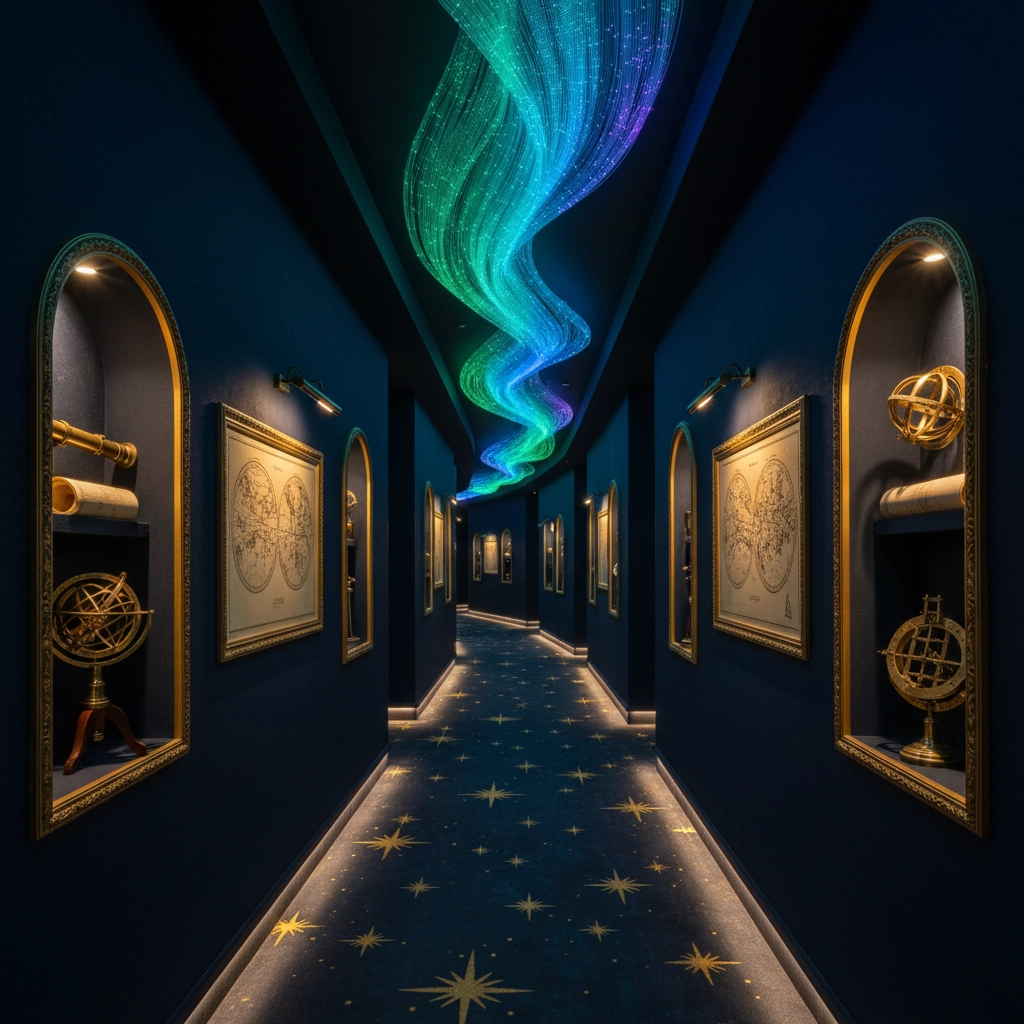
Advanced lighting technologies enable hotels to implement sophisticated celestial effects including constellation projectors that cast moving star patterns on ceilings, fiber optic installations mimicking the Milky Way, color-changing LED systems transitioning from sunset to midnight blues, and moonlight simulation through carefully positioned spotlights.
Essential Celestial Art Elements
Contemporary celestial installations incorporate diverse artistic mediums that work together to create comprehensive cosmic environments. Hotels should consider integrating antique astronomical instruments as decorative elements, historical star charts and constellation maps, vintage celestial paintings in original period frames, and observatory-inspired architectural details.
Local craftsmanship plays a crucial role in creating authentic celestial experiences that reflect regional artistic traditions while maintaining cosmic themes. Collaboration with local artisans enables hotels to commission unique pieces that blend stellar motifs with cultural heritage, creating distinctive installations unavailable elsewhere.
Multi-sensory integration enhances celestial art effectiveness through complementary elements including ambient soundscapes featuring space-inspired audio, scent diffusion systems with ethereal fragrances, tactile elements like meteorite fragments or cosmic textures, and interactive digital displays showing real-time astronomical data.
Case Studies and Real-World Applications
The Celestial Suite at Hacienda San Angel demonstrates how cosmic themes create luxury experiences with historical significance. This implementation showcases how celestial art can exude elegance and cultural depth, with each piece contributing to cohesive narrative experiences that invite guests to connect with both artistic heritage and cosmic wonder.
The suite integration includes authentic historical elements such as Mexican paintings and gold-leaf Venetian chandeliers, creating harmonious blends of culture, art, and celestial themes that transport guests through time and space simultaneously. This approach demonstrates how hotels can successfully merge cosmic aesthetics with local cultural elements.
Culture boutique hotels often feature authentic design housed in uniquely designed spaces that reflect destination heritage while incorporating celestial motifs. These properties demonstrate how cosmic themes can enhance rather than overshadow local cultural significance, creating layered experiential narratives that appeal to sophisticated travelers.
Implementation Framework for Hotels
Hotels should approach celestial art integration through systematic planning processes that consider guest demographics, property architecture, budget constraints, and operational requirements. The implementation framework begins with comprehensive space analysis to identify optimal locations for celestial installations while ensuring minimal disruption to daily operations.
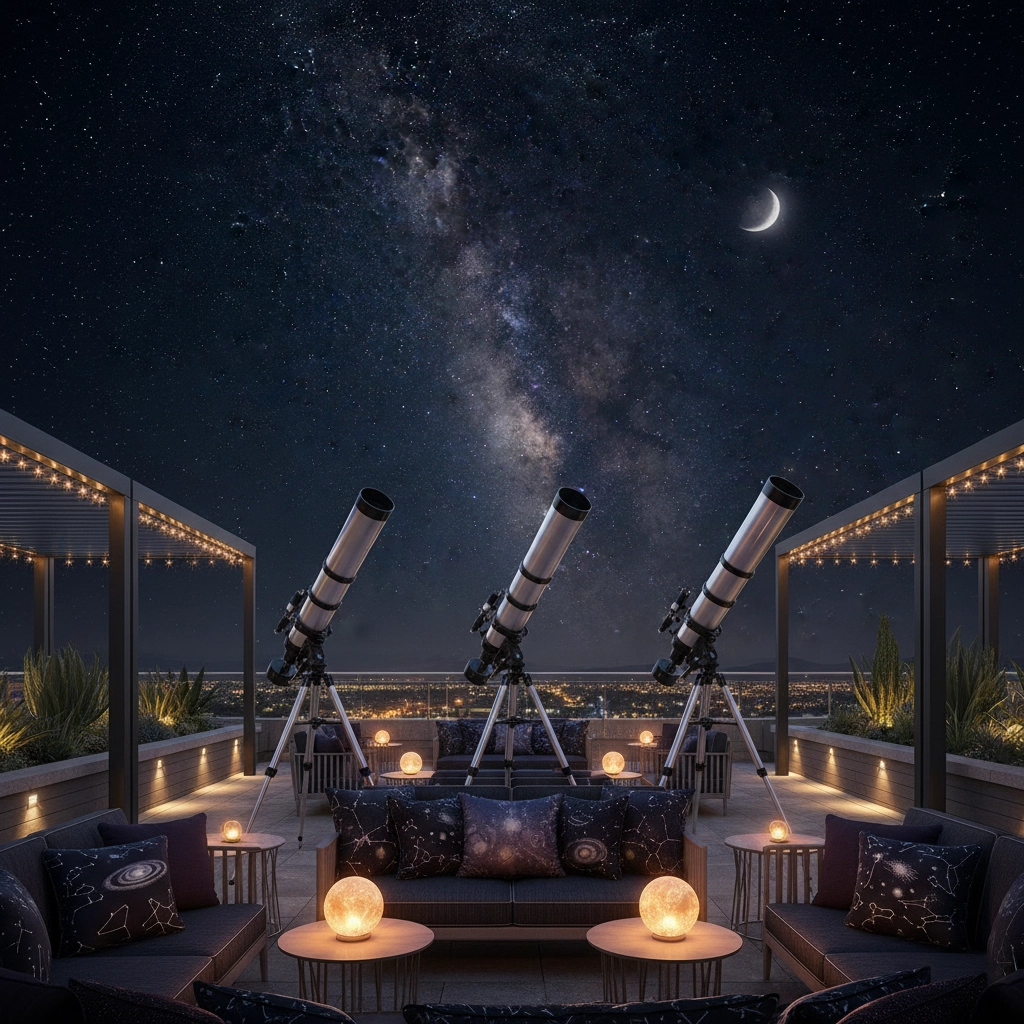
Curated art collections require partnerships with astronomical societies, planetariums, contemporary artists specializing in cosmic themes, scientific institutions providing authentic space imagery, and local craftspeople creating custom celestial pieces. These collaborations ensure authentic artistic content while supporting local creative communities.
Cultural experiences enhance celestial art effectiveness through complementary programming including private stargazing sessions with professional telescopes, astronomy workshops and constellation identification classes, planetarium partnerships for exclusive guest experiences, and cosmic-themed dining experiences under artificial or real starlight.
Measuring Success and Performance Metrics
The integration of celestial art and hospitality creates measurable improvements in guest satisfaction, return visit rates, and revenue generation capabilities. Hotels implementing cosmic themes should establish comprehensive tracking systems monitoring guest feedback specifically mentioning atmospheric experiences, social media engagement and photo sharing of celestial elements, repeat booking metrics and guest loyalty indicators, and premium pricing acceptance for celestial-themed accommodations.
Success measurement requires ongoing evaluation of artistic installation effectiveness, guest response patterns, and operational impact assessments. Hotels should conduct regular reviews of celestial art performance to identify optimization opportunities and ensure continued alignment with guest expectations and market positioning objectives.
By implementing comprehensive celestial art strategies that integrate thoughtful design principles, advanced lighting technologies, authentic artistic elements, and complementary experiential programming, hotels can create transformative environments that elevate brand positioning, increase guest satisfaction scores, and establish distinctive market advantages in competitive hospitality sectors.