7 Mistakes You're Making with Space-Themed Art (and How to Fix Them)
Space-themed artwork transforms interior environments by introducing cosmic wonder and celestial beauty into residential and commercial spaces. However, the implementation of astronomical art requires careful consideration of placement, scale, and design principles to achieve optimal visual impact. Seven critical errors frequently compromise the effectiveness of space-themed installations, resulting in missed opportunities for creating compelling atmospheric experiences.
Mistake #1: Incorrect Hanging Height for Cosmic Artwork
The most pervasive error involves positioning space-themed art at improper heights, typically mounting celestial pieces too high on wall surfaces. Professional galleries maintain artwork at eye level, approximately 57-60 inches from floor to the center of the frame, yet residential and commercial installations frequently deviate from this standard.
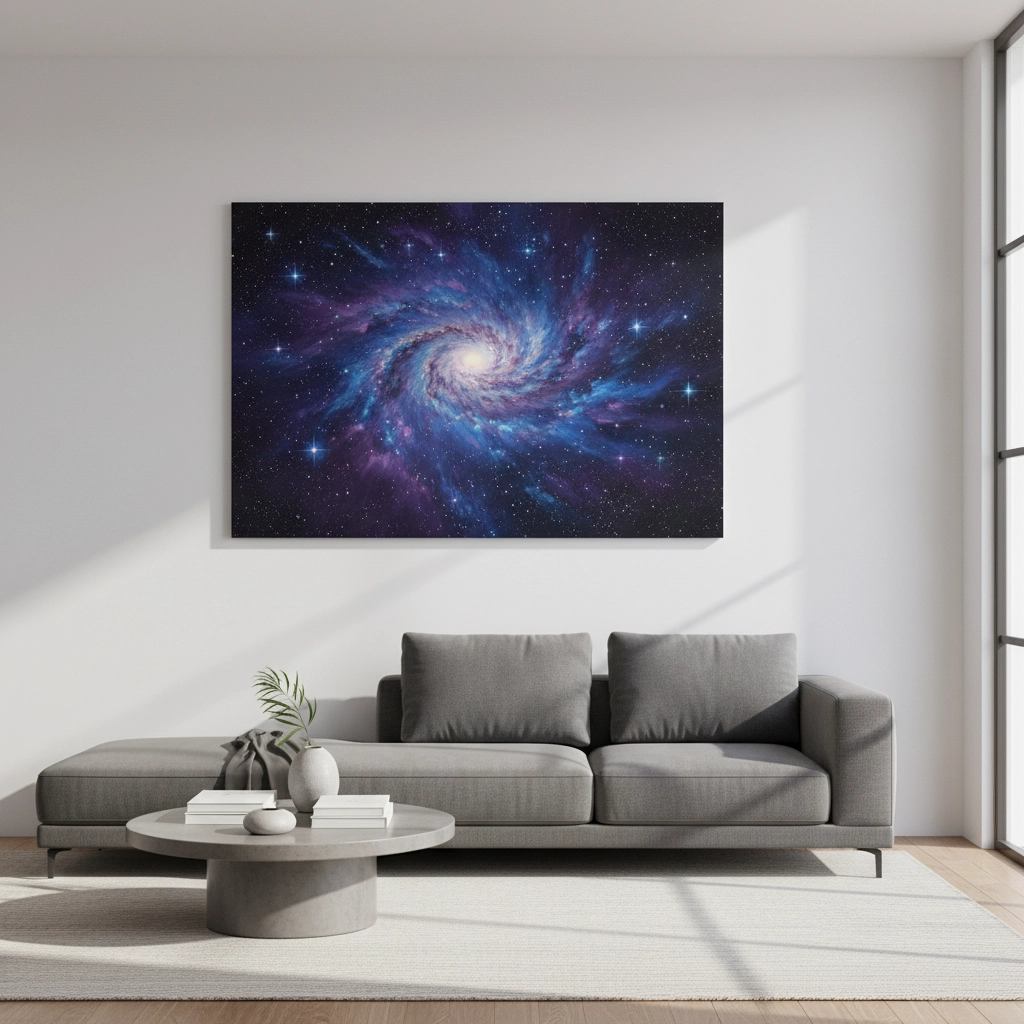
Space art featuring intricate nebula details, star field compositions, or planetary surface imagery loses visual impact when viewers must crane their necks upward. Galaxy photographs and cosmic paintings contain subtle gradations and fine details that require comfortable viewing angles for proper appreciation.
The Solution: Measure 57-60 inches from floor level and mark the center point of your space artwork. For groupings of multiple cosmic pieces, maintain consistent center heights while adjusting for frame size variations. In seating areas, consider lowering artwork slightly to accommodate typical seated viewing positions.
Mistake #2: Scale Disproportions in Space Art Selection
Astronomical artwork presents unique scaling challenges due to the vast nature of cosmic subjects. Small space prints appear lost on expansive wall surfaces, while oversized galaxy images overwhelm intimate room settings. The relationship between artwork dimensions and surrounding architectural elements determines visual harmony or discord.
Space-themed pieces above furniture should measure approximately two-thirds the width of the underlying surface. A 36-inch wide console requires space art measuring roughly 24 inches in width for balanced proportions. Conversely, large cosmic murals or panoramic star field photographs demand substantial wall areas to prevent overwhelming smaller rooms.
The Solution: Measure your wall space and furniture dimensions before selecting space artwork. Create paper templates matching potential frame sizes and tape them to walls for visual assessment. Consider the viewing distance: larger spaces accommodate bigger cosmic pieces, while intimate settings benefit from moderately sized astronomical art.
Mistake #3: Ignoring Room Function When Choosing Space Themes
Different cosmic themes serve varying psychological and atmospheric purposes, yet many installations disregard room functionality when selecting space artwork. Active star formation regions with vibrant colors and dynamic compositions may overstimulate bedroom environments intended for rest and relaxation.
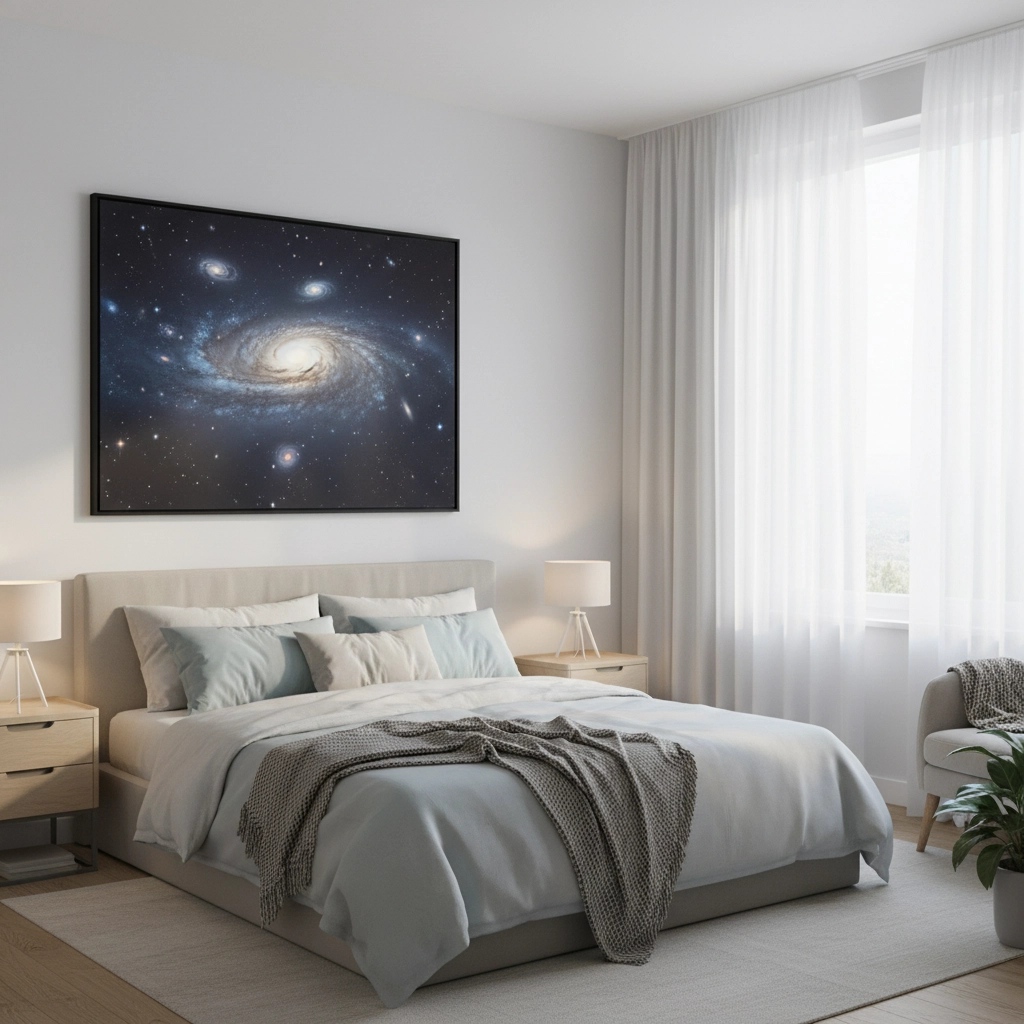
Office spaces benefit from inspiring cosmic vistas that encourage creativity and forward thinking, while bedrooms respond better to serene nebula scenes or peaceful moonscapes. Living areas can accommodate more dramatic space themes, including vibrant galaxy clusters or dynamic solar system compositions.
The Solution: Match space art themes to room purposes. Select calming deep space imagery for bedrooms, featuring dark nebulae or distant galaxy clusters. Choose energizing cosmic scenes for workspaces, such as colorful star formation regions or dramatic planetary landscapes. Living areas accommodate diverse space themes based on desired atmospheric effects.
Mistake #4: Overcrowding Walls with Excessive Space Art
The temptation to display entire cosmic collections simultaneously creates visual chaos and diminishes individual piece impact. Space-themed artwork requires breathing room to convey the vastness and majesty inherent in astronomical subjects. Overcrowded installations prevent viewers from properly absorbing celestial beauty.
Multiple space pieces competing for attention create fragmented viewing experiences rather than cohesive cosmic narratives. Each astronomical artwork contains sufficient visual complexity to anchor entire wall sections without additional support from neighboring pieces.
The Solution: Implement strategic spacing between space art pieces, allowing each cosmic scene adequate visual territory. Follow the general guideline of 2-3 inches between smaller pieces and 3-5 inches between larger works. Consider creating focal points with single statement pieces rather than clustering multiple space artworks together.
Mistake #5: Inadequate Lighting for Space Artwork
Space-themed art requires specialized lighting considerations due to the nature of cosmic imagery. Dark backgrounds common in astronomical photography and space paintings can disappear under insufficient illumination, while excessive lighting creates glare that obscures subtle stellar details.
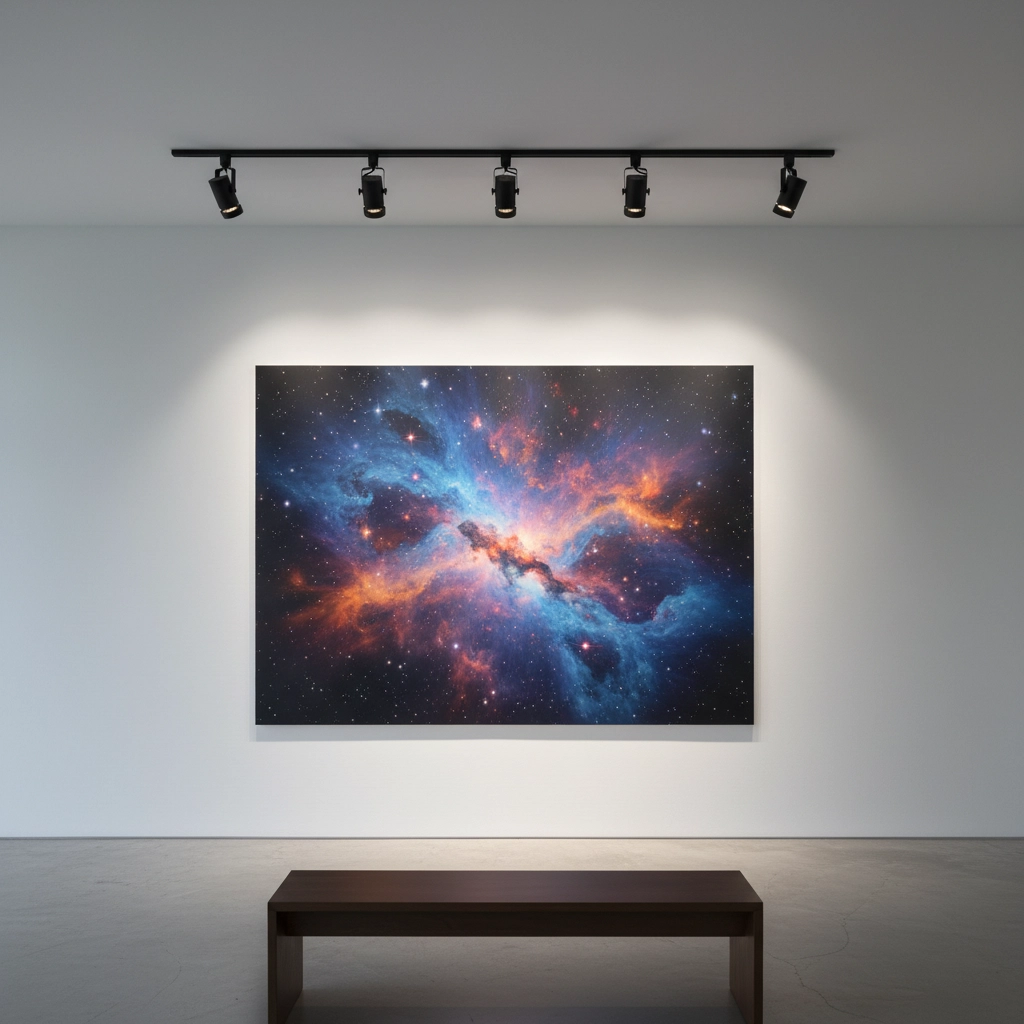
Many space art installations suffer from generic overhead lighting that fails to highlight the luminous qualities inherent in cosmic subjects. Stars, nebulae, and planetary surfaces contain varied luminosity levels that respond differently to lighting conditions.
The Solution: Install adjustable track lighting or picture lights specifically for space artwork. LED strips with color temperature controls allow fine-tuning of illumination to complement different cosmic themes. Avoid direct lighting that creates reflective glare on glass-covered pieces, instead utilizing angled lighting that enhances rather than obscures astronomical details.
Mistake #6: Mixing Incompatible Space Art Styles
Combining realistic astronomical photography with abstract space interpretations or cartoon-style cosmic art creates stylistic conflicts that undermine installation coherence. While variety prevents monotony, dramatic style disparities fragment visual narratives and confuse atmospheric intentions.
Scientific space imagery carries different emotional weight than artistic interpretations of cosmic themes. Documentary-style astronomical photographs suggest precision and authenticity, while impressionistic space paintings evoke emotional responses and imaginative interpretation.
The Solution: Establish dominant style categories for space art collections. Group realistic astronomical photography separately from artistic cosmic interpretations. When mixing styles, ensure connecting elements such as color palettes, subject matter, or compositional approaches create visual bridges between different cosmic art pieces.
Mistake #7: Neglecting Color Coordination with Existing Decor
Space artwork contains inherent color palettes dominated by deep blues, purples, blacks, and metallic accents that may clash with existing interior color schemes. Many installations fail to consider how cosmic artwork interacts with wall colors, furniture finishes, and decorative elements.
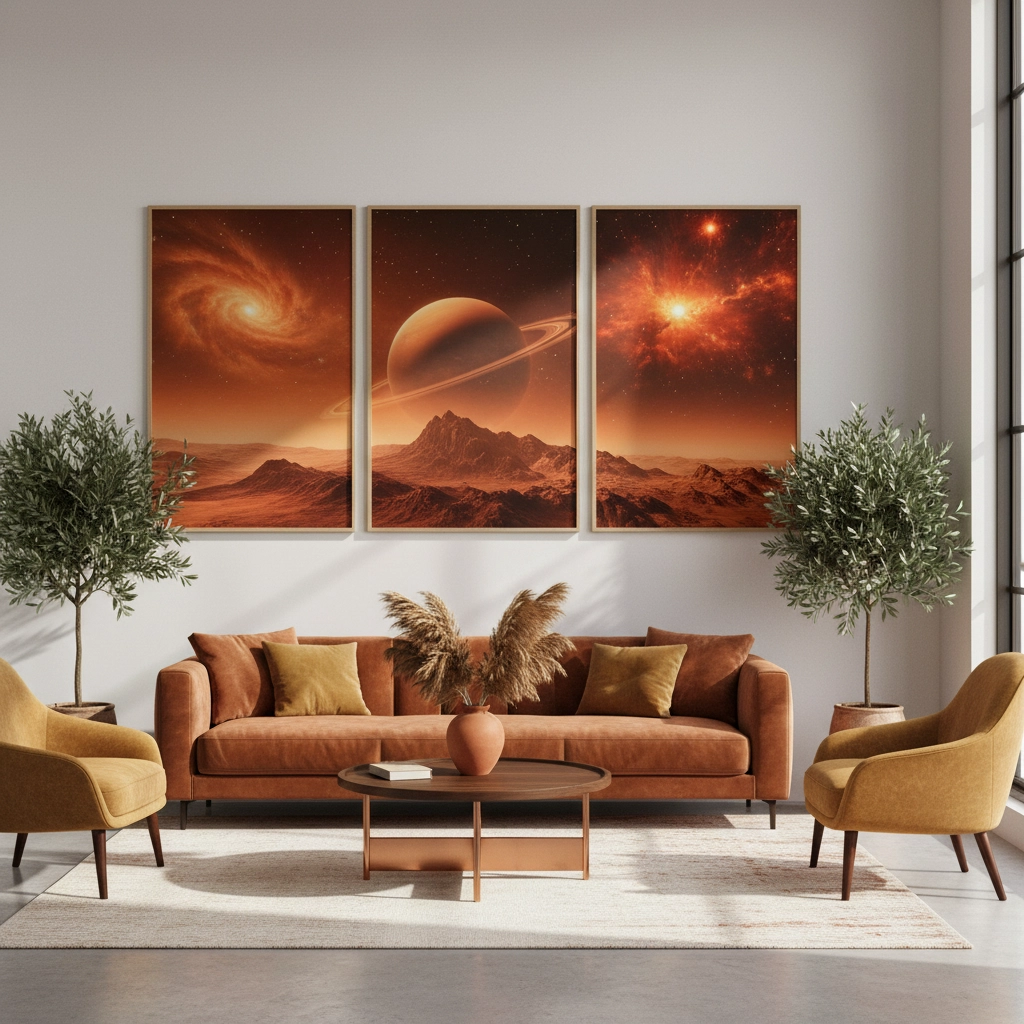
Warm-toned interiors may struggle to accommodate cool cosmic color palettes, while minimalist spaces might appear unbalanced when introducing vibrant nebula colors. The relationship between space art colors and surrounding elements determines integration success or visual discord.
The Solution: Analyze existing room colors before selecting space artwork. Cool cosmic palettes complement neutral and cool-toned interiors, while warmer space themes featuring orange nebulae or sunset-colored planetary scenes integrate better with warm color schemes. Consider matting and framing options that bridge color gaps between artwork and surrounding decor.
Implementation Strategies for Space Art Success
Successful space-themed installations require comprehensive planning that addresses placement, scale, lighting, and stylistic considerations simultaneously. Begin with room assessment, identifying available wall space, existing lighting conditions, and functional requirements.
Create detailed installation plans before purchasing cosmic artwork, including measurements, lighting specifications, and color coordination strategies. Professional consultation may prove valuable for significant space art investments or complex installation requirements.
Regular evaluation ensures continued effectiveness as room functions evolve and personal preferences develop. Space-themed artwork investments deserve thoughtful implementation that maximizes their atmospheric and aesthetic contributions to interior environments.
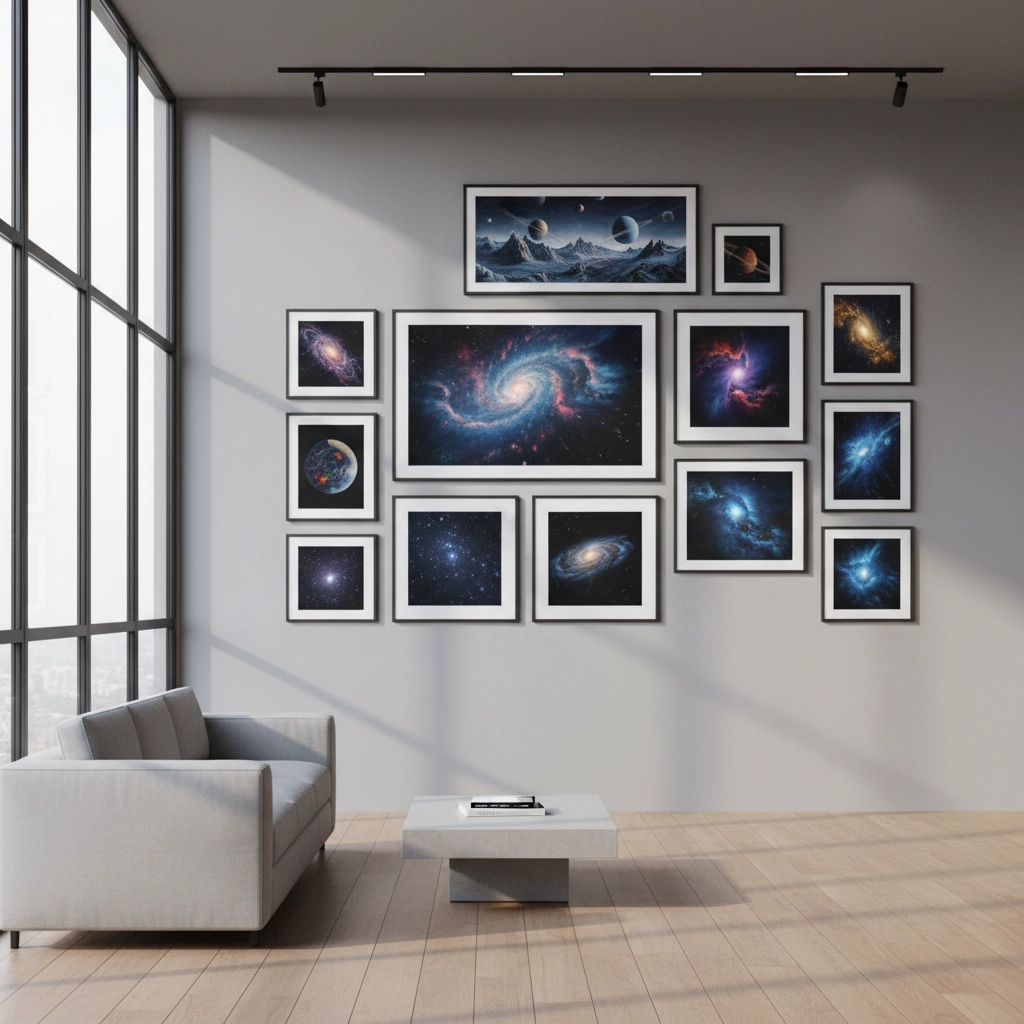
The transformation potential of well-executed space art installations extends beyond simple decoration to create immersive cosmic experiences that inspire wonder and contemplation. Avoiding these seven common mistakes enables the full realization of space-themed artwork's capacity to transport viewers beyond earthly confines into the infinite beauty of the cosmos.